The question mark in that title is doing real work. Calling any natural supplement combination “powerful” invites the kind of skepticism it deserves, because the supplement industry has a long and undistinguished history of making powerful sound like a scientific descriptor when it is usually just a marketing adjective. But the berberine-Akkermansia combination for GLP-1 support is genuinely worth asking the question about, because the answer is more interesting than either a confident yes or a dismissive no. It is a stack that the biology supports in specific, articulable ways, whose individual components have more clinical evidence behind them than most of what shares shelf space with them, and whose combination addresses the GLP-1 production system at multiple levels that single-supplement approaches leave partially covered.
What Makes a Natural GLP-1 Stack Worth Taking Seriously
The bar for taking a supplement combination seriously should be higher than the bar the supplement industry typically sets for itself. A stack worth evaluating should meet several criteria: each component should have a documented mechanism connecting it to the target biological pathway, the mechanisms of the different components should be distinct enough that combination produces genuine additivity rather than redundancy, there should be human clinical evidence for meaningful outcomes with each component individually, and the safety profile should be established well enough to support use without unacceptable uncertainty.
Running berberine and Akkermansia through that checklist produces a more favorable result than most natural combinations achieve. Berberine has direct L-cell stimulation, DPP-4 inhibition, and AMPK activation as its documented GLP-1-related and metabolic mechanisms, supported by multiple randomized controlled trials with measured clinical outcomes. Akkermansia has mucus layer maintenance, gut barrier preservation, Amuc_1100 protein-mediated enteroendocrine modulation, and SCFA-supporting cross-feeding ecology as its mechanisms, supported by germ-free animal experiments, multiple metabolic intervention studies, and a pivotal human clinical trial. The mechanisms do not overlap in meaningful ways. The safety profiles, while not identical in risk profile, are both favorable within their established dosing ranges. The checklist clears.
Berberine’s Contribution: Speed, Chemistry, and Metabolic Breadth
Berberine is the faster-acting of the two supplements in terms of direct GLP-1 effects, and the one with the deeper clinical evidence base. Its contribution to the stack operates on several timescales simultaneously, which is part of what makes it a valuable anchor for the combination.
The Acute GLP-1 Effects
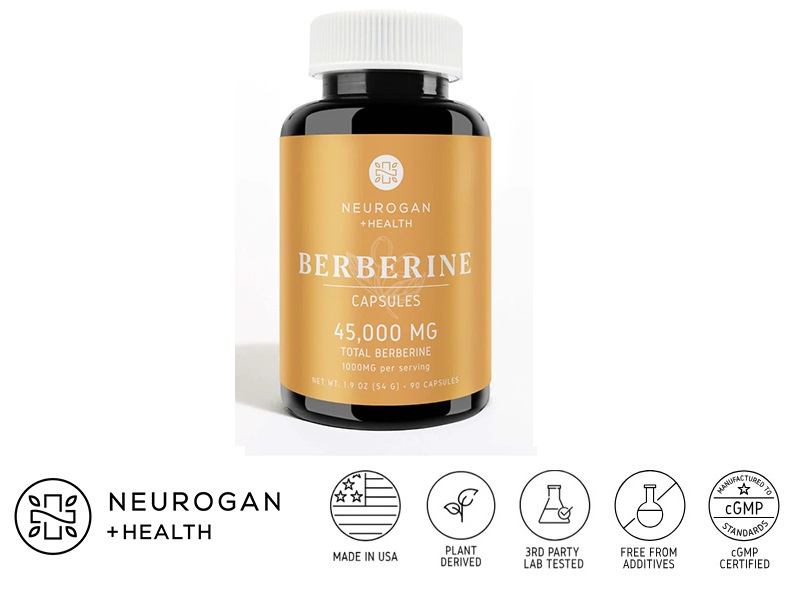
Berberine’s activation of receptors on intestinal L-cells and its inhibition of DPP-4 both operate within the timeframe of a single dose. Taking berberine before a meal increases the GLP-1 available to modulate that meal’s postprandial metabolic response, through more hormone produced and less hormone degraded. This acute effect creates measurable changes in postprandial glucose curves and insulin responses relatively early in a supplementation protocol, providing the kind of near-term signal that gives people evidence the protocol is doing something before the longer-term structural changes from Akkermansia have fully developed. In a combined stack, berberine’s acute effects provide the front-end GLP-1 support while Akkermansia’s structural contributions build in the background over weeks.
The AMPK Layer
Berberine’s activation of AMPK operates independently of GLP-1 and adds a metabolic dimension to the stack that Akkermansia does not contribute to directly. Improved insulin sensitivity in liver and muscle tissue, reduced hepatic glucose production, and enhanced fat oxidation in peripheral cells all follow from AMPK activation, improving the metabolic environment in which GLP-1 acts without depending on GLP-1 as an intermediary. The practical significance is that berberine’s contribution to the stack’s metabolic outcomes extends beyond the GLP-1 pathway, making the combination more comprehensively useful for metabolic health than a stack focused exclusively on GLP-1 stimulation would be.
Akkermansia’s Contribution: Architecture, Ecology, and Duration
Akkermansia’s contributions develop more slowly than berberine’s but address biological dimensions of GLP-1 support that no small molecule intervention can replicate. Its value to the stack is foundational in a way that becomes more pronounced as the protocol continues.
Raising the Ceiling on GLP-1 Production Capacity
The most important thing Akkermansia contributes to the stack is something that is easy to undervalue because it is invisible in the short term: it raises the ceiling on how much GLP-1 the L-cell population can produce. L-cells operating in a depleted-Akkermansia gut environment are functioning below their secretory potential because of elevated local inflammation, compromised structural support, and diminished SCFA stimulation. Berberine arriving to chemically stimulate those L-cells gets a less vigorous response than it would from cells in a healthier gut environment. Restoring Akkermansia improves the baseline function of the L-cell population, meaning berberine’s chemical stimulation acts on cells capable of producing more GLP-1 per stimulus. Over twelve weeks of combined use, this ceiling-raising effect compounds: the L-cell environment gradually improves, and berberine’s direct stimulation becomes more effective as it does.
The Long Ecological Game
Akkermansia’s cross-feeding relationships with butyrate-producing bacteria, and its contribution to a gut microbial community that generates SCFA-rich conditions around colonic L-cells, develop over weeks of consistent supplementation. This ecological contribution to the SCFA-mediated GLP-1 stimulation pathway is distinct from berberine’s microbiome remodeling effects, adding another ecological angle to the stack’s cumulative influence on the gut fermentation environment. By twelve weeks, a gut that has been consistently supported by both berberine and Akkermansia has a more favorable microbial ecology for GLP-1 production than either supplement could build independently, because the two have been working on the same microbial community from different angles: berberine selectively reducing unfavorable populations and Akkermansia supporting the structural and cross-feeding relationships that sustain the favorable ones.
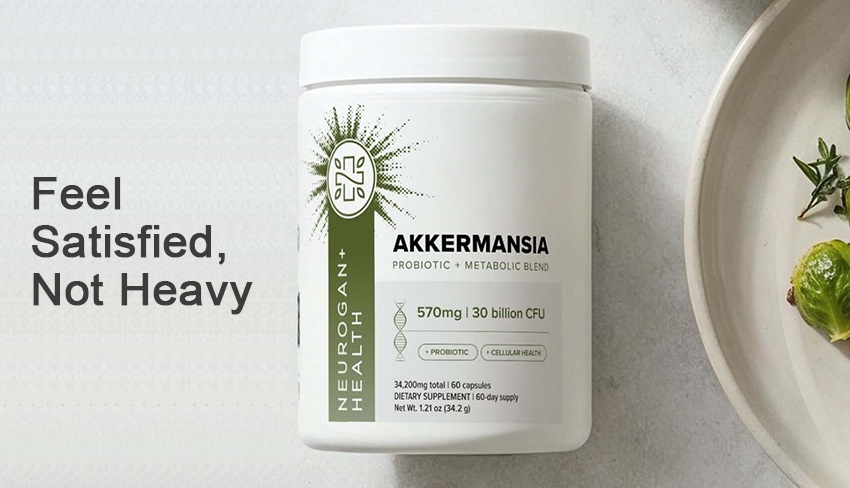
Real-World Expectations: What Powerful Actually Means Here
Translating the biological case for this stack into honest real-world expectations requires confronting the word “powerful” one more time. In the context of natural GLP-1 support, powerful should mean: produces meaningful, measurable improvements in the metabolic markers that reflect GLP-1 activity, with effects large enough to matter clinically for the populations most likely to benefit, sustained over the time period that realistic use spans, and with a safety profile that makes the benefit-risk assessment favorable. That is a description that fits the berberine-Akkermansia combination reasonably well, with the caveat that the magnitude of effect falls considerably short of pharmaceutical GLP-1 receptor agonism.
What Improvement Looks Like in Practice
For people with prediabetes or mildly elevated blood sugar, the most likely observable outcomes over twelve weeks of consistent protocol use include reduced fasting blood glucose, flatter postprandial glucose curves, improved meal satisfaction and reduced appetite between eating occasions, and trending improvements in HbA1c that become statistically meaningful over a full three-month measurement cycle. Lipid profile improvements, particularly reductions in triglycerides and LDL, are among berberine’s most reliable outcomes and add a cardiovascular dimension to the metabolic benefits. Akkermansia’s contribution to gut barrier integrity often manifests as reduced systemic inflammatory markers and improved digestive comfort, changes that are meaningful to quality of life even when they are not the primary metabolic targets.
Frequently Asked Questions
What Is the Most Important Difference Between Berberine and Akkermansia in This Stack?
Berberine works chemically and enzymatically: it stimulates GLP-1 secretion directly, inhibits the enzyme that degrades it, and activates AMPK to improve metabolic efficiency across multiple tissue types. Akkermansia works structurally and ecologically: it maintains the gut environment in which GLP-1-producing L-cells function and cultivates the microbial conditions that support ongoing SCFA-mediated L-cell stimulation. One is a small molecule acting on receptors and enzymes; the other is a living organism maintaining biological infrastructure. That is a fundamental difference in how each contributes to the stack, which is exactly why the combination is additive rather than redundant.
Is This Stack Appropriate for Someone Who Has Never Taken Either Supplement Before?
Yes, with sensible precautions. People new to berberine should ramp up the dose gradually over two to three weeks to minimize gastrointestinal adjustment effects. Starting berberine first and introducing Akkermansia after the adjustment period allows clearer attribution of any early effects. Anyone on medications affecting blood sugar or blood pressure should discuss berberine specifically with their prescribing physician before starting, as its glucose-lowering effects can compound with those medications in ways that require monitoring. Akkermansia at standard supplementation doses has a favorable safety profile for adults without active inflammatory bowel disease.
How Does the Combined Stack Compare to a Single High-Dose Berberine Approach?
Increasing berberine beyond the established therapeutic range of 1,000 to 1,500 mg daily does not produce proportionally greater benefits and increases the risk of gastrointestinal side effects. More importantly, it cannot address the structural and ecological dimensions of GLP-1 support that Akkermansia provides. No amount of berberine maintains the intestinal mucus layer, restores Amuc_1100-mediated gut barrier function, or rebuilds the cross-feeding microbial relationships that support butyrate production around colonic L-cells. The combination at evidence-supported doses for each supplement outperforms higher berberine doses alone for the same reasons that two distinct mechanisms outperform a single mechanism pushed to its limits.