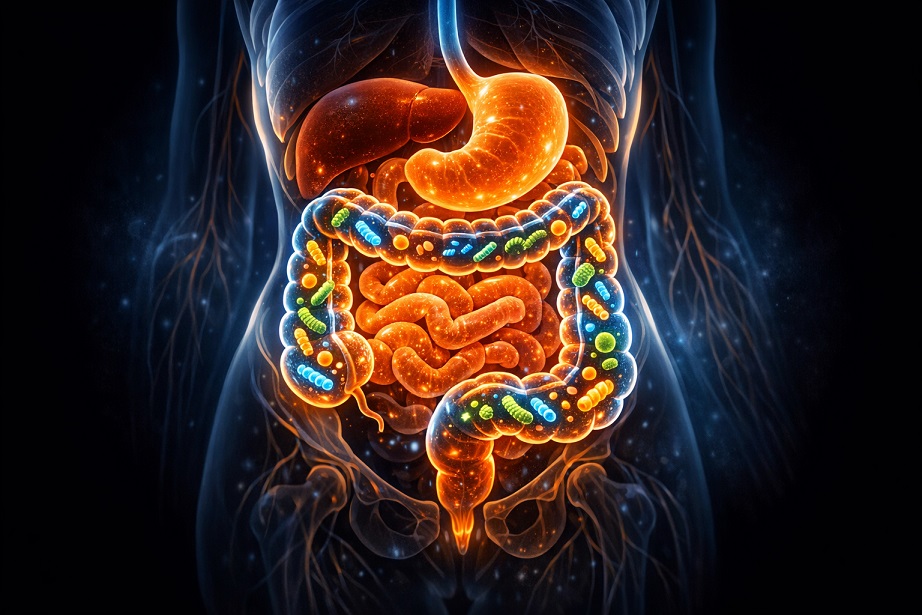
The standard advice for improving bowel regularity is simple enough that it fits on a sticky note: eat more fiber, drink more water, exercise regularly. This advice is not wrong. All three factors genuinely contribute to normal bowel function, and people who are chronically constipated often find meaningful improvement from consistently applying all three. The problem is when this simple framework is treated as complete, as if regular bowel movements were solely a matter of sufficient fiber and hydration rather than the product of a complex interaction between diet, the enteric nervous system, gut microbiome activity, hormone regulation, and the mechanical properties of the gut itself.
For many people dealing with chronic irregularity, the fiber-and-water approach has been tried and found insufficient. Not because the advice is wrong in principle, but because their irregularity has roots in biological factors that dietary fiber and water alone cannot fully address. Understanding the full picture of what governs regularity makes it possible to identify and address those additional factors rather than repeating the same recommendations that have already been proven insufficient in a given individual’s situation.
The Enteric Nervous System: The Gut’s Own Brain
The gastrointestinal tract contains approximately 500 million neurons, more than the spinal cord, organized into a semi-autonomous nervous system called the enteric nervous system (ENS). This system coordinates the muscular contractions that move intestinal contents, regulates secretion and absorption of fluid, and integrates signals from the gut environment to modulate these activities continuously. The ENS can operate independently of the central nervous system, though it is significantly influenced by it, which is why emotional states, stress, and anxiety have such immediate and often dramatic effects on bowel function.
Motility and the Peristaltic Reflex
Intestinal motility, the coordinated muscular contractions that propel contents through the gut, is the primary mechanical determinant of transit time and therefore of regularity. Peristalsis, the wave-like contraction that moves material forward, is triggered by distension of the gut wall, which activates mechanoreceptors connected to enteric neurons. When stool volume and consistency are inadequate to trigger sufficient distension, the peristaltic reflex is not adequately stimulated, and transit slows. This is the direct mechanical reason why dietary fiber, by adding bulk to stool, supports regularity. But the ENS response to distension is not fixed. It is influenced by the signaling environment it operates within, and that environment is significantly shaped by the gut microbiome.
The Microbiome’s Role in Motility Regulation
Research over the past decade has established that the gut microbiome plays a significant and previously underestimated role in regulating intestinal motility through its production of short-chain fatty acids and other signaling molecules that directly act on enteric neurons and the gut epithelium.
Short-Chain Fatty Acids as Motility Signals
When beneficial gut bacteria, particularly Bifidobacterium, ferment prebiotic fiber in the colon, the primary fermentation products include butyrate, propionate, and acetate. These short-chain fatty acids are not merely local energy substrates. They are also signaling molecules that interact with free fatty acid receptors on enteric neurons and on enterochromaffin cells, the specialized gut cells that produce serotonin. Approximately 95 percent of the body’s total serotonin is produced in the gut, and this gut-derived serotonin is the primary neurotransmitter of the enteric nervous system, governing peristaltic reflex timing, coordination, and intensity.
Short-chain fatty acids stimulate enterochromaffin cells to release serotonin, which then activates intrinsic sensory neurons in the ENS to trigger the peristaltic reflex. This means that gut bacterial fermentation activity is a primary regulator of the serotonin signaling that drives intestinal motility. A gut microbiome with robust Bifidobacterium populations producing adequate short-chain fatty acids will consistently generate the serotonin signal that keeps peristalsis appropriately active. A depleted or dysbiotic microbiome producing inadequate short-chain fatty acids will generate insufficient serotonin signaling, contributing to sluggish motility that dietary fiber alone may not fully correct because the signaling deficit persists regardless of fiber intake.

The Serotonin Connection Explains Individual Variation
This connection between gut bacterial fermentation and gut serotonin production helps explain one of the most frustrating aspects of constipation management: why some people respond dramatically to increased dietary fiber while others see minimal improvement despite conscientiously increasing their intake. The difference often lies in whether the underlying microbiome is capable of producing the fermentation-mediated serotonin signals that activate peristalsis. Someone whose gut fermentation activity is robust will get significant motility benefits from added fiber because more substrate means more short-chain fatty acid production means more serotonin signaling. Someone whose beneficial bacterial populations are depleted will ferment the same fiber less efficiently, produce fewer short-chain fatty acids, generate less serotonin stimulation, and experience a muted motility response to what should theoretically be sufficient fiber intake.
Hormonal Regulation: Beyond Serotonin
Regularity is also governed by hormonal signals that operate on longer timescales than the immediate peristaltic reflex. Motilin, a hormone produced in the small intestine, stimulates the migrating motor complex that sweeps the small intestine clean between meals, preparing it for the next digestive cycle. Cholecystokinin, produced in response to fat and protein entering the small intestine, stimulates gallbladder contraction and pancreatic enzyme secretion while also modulating gastric emptying rate. Aldosterone and antidiuretic hormone influence colonic fluid balance, affecting stool moisture and consistency.
The gut microbiome influences several of these hormonal systems. Short-chain fatty acids stimulate the release of glucagon-like peptide-1 and peptide YY from gut endocrine cells, both of which affect gastric emptying and overall gut transit. The gut microbial community also influences the metabolism of bile acids, which have their own motility-regulating effects through activation of bile acid receptors on enteric neurons and epithelial cells. A microbiome that efficiently processes bile acids produces secondary bile acids with distinct motility effects from primary bile acids, and the balance between these has been associated with both constipation-type and diarrhea-type bowel patterns in research linking bile acid metabolism to transit time.
Hydration and Regularity: The Microbiome Connection
Even the relationship between water intake and stool consistency has a microbiome dimension. The water content of stool is regulated by the colon’s capacity to either reabsorb water from intestinal contents or secrete it into the lumen, depending on the signals it receives. Short-chain fatty acids produced by gut bacterial fermentation influence colonic water handling, and the mucus layer whose production is stimulated by Bifidobacterium and butyrate maintains a lubricated surface that facilitates smooth transit of intestinal contents. A gut with robust Bifidobacterium fermentation is therefore not only producing the motility signals that move contents along but also maintaining the physical conditions that make transit comfortable.
The practical implication of all this is that addressing chronic irregularity most effectively requires attending to the gut microbiome as a primary target alongside dietary fiber and hydration. Providing Bifidobacterium with the selective prebiotic substrate it needs through Inulin-FOS supplementation supports the fermentation activity that generates the short-chain fatty acids, serotonin stimulation, and bile acid modulation that together regulate transit in ways that fiber and water intake alone cannot replicate. Regularity, understood properly, is a microbial ecosystem outcome as much as a dietary one.