You probably know the probiotic aisle. Lactobacillus acidophilus, Bifidobacterium longum, maybe a multi-strain blend with a cheerful label promising digestive harmony. These are the familiar faces of the probiotic world, the ones that have been in yogurt commercials and supplement bottles for decades. Akkermansia muciniphila is not one of them. It lives in a completely different part of the gut, works through completely different mechanisms, and until very recently existed almost entirely outside of public awareness despite being one of the most intensively studied bacteria in metabolic health research.
The gap between how much scientists know about Akkermansia and how much the general public has heard of it is narrowing fast, driven by a convergence of factors: the explosion of interest in GLP-1 biology, a landmark human clinical trial that impressed even skeptical researchers, and a growing recognition that the conventional probiotic category simply has not been targeting the mechanisms that matter most for metabolic health. If you have not heard of Akkermansia yet, you almost certainly will soon. And understanding it now, before the marketing noise catches up to the science, puts you in a considerably better position to evaluate what it can and cannot do.
A Bacterium Unlike Any Other in Your Gut
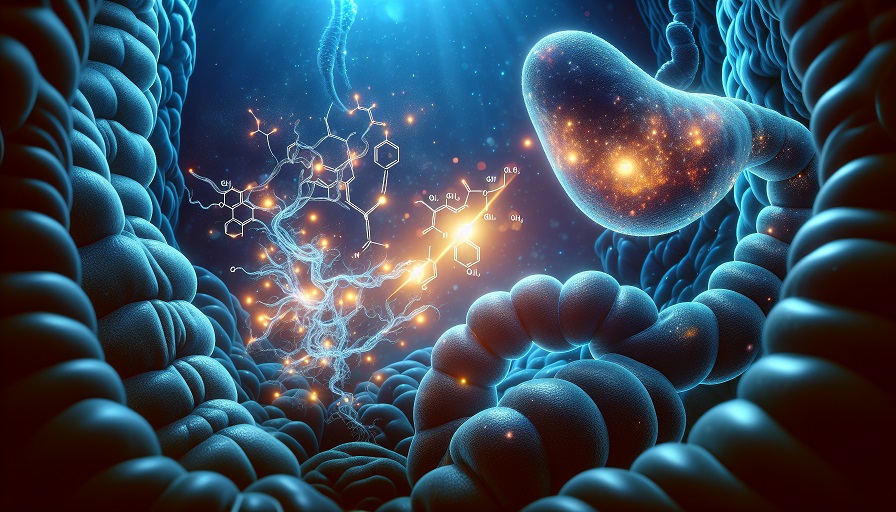
Most gut bacteria that have made it onto supplement shelves evolved as fermenters of dietary carbohydrates, thriving in the presence of fiber and producing acids that lower gut pH and create conditions hospitable to other beneficial microbes. Akkermansia muciniphila does something altogether different. It lives in the mucus layer that coats the inner surface of the intestinal wall, feeding not on the food you eat but on the mucin glycoproteins your intestinal cells secrete to protect themselves. This niche is so specialized that for years after its discovery in 2004, culturing it in a laboratory required mimicking the specific conditions of that mucus environment, which slowed early research considerably.
Why Its Habitat Defines Its Function
The mucus layer Akkermansia inhabits is not just a physical barrier. It is the immediate environment of the intestinal epithelium, the single-cell-thick lining where nutrient absorption happens, where immune surveillance occurs, and where the enteroendocrine cells that produce GLP-1 and other metabolic hormones reside. A bacterium that lives in and actively maintains this layer is positioned to influence all of those processes in ways that bacteria living further out in the gut lumen simply cannot. Akkermansia’s address in the gut is not incidental to its metabolic effects. It is the foundation of them.
By feeding on mucin, Akkermansia continuously stimulates the intestinal cells beneath it to produce more of it. This creates a dynamic equilibrium where mucin consumption and renewal run in parallel, resulting in a thicker, more robust mucus layer than would exist without Akkermansia’s presence. That structural benefit cascades through the intestinal environment in ways that improve gut barrier function, reduce systemic inflammation, and create the conditions under which GLP-1-producing L-cells can do their jobs properly.
How It Was Discovered and Why It Took So Long
Akkermansia muciniphila was first isolated and characterized by Muriel Derrien and her colleagues at Wageningen University in the Netherlands and described in a 2004 paper in the International Journal of Systematic and Evolutionary Microbiology. Its name reflects its defining characteristic: “muciniphila” means mucus-loving. For the first several years after its discovery, research moved slowly because the bacterium’s anaerobic nature and specialized nutritional requirements made it technically demanding to work with. The development of better culturing techniques and the advent of next-generation sequencing, which allows researchers to identify and quantify gut bacteria from stool samples without needing to grow them in a dish, opened the field up considerably in the years that followed. By the mid-2010s, the research had accelerated to the point where Akkermansia was appearing as a consistent finding in studies of obesity, diabetes, cardiovascular disease, and inflammatory conditions, always trending in the same direction: less Akkermansia, worse metabolic outcomes.
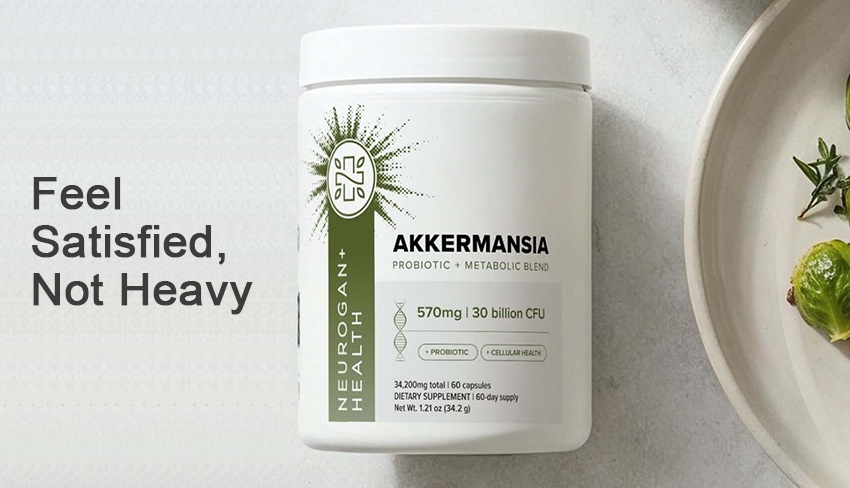
The GLP-1 Connection That Changes the Picture
Akkermansia would be interesting purely as a gut barrier bacterium. Its influence on GLP-1 production is what elevates it into a different category of metabolic relevance entirely, and what connects it to one of the most significant developments in metabolic medicine of the past decade.
From Barrier Function to Hormone Production
The path from Akkermansia’s mucus-maintaining activity to GLP-1 production runs through gut barrier integrity. When the mucus layer is healthy and intact, the intestinal epithelium beneath it is protected from the low-grade inflammatory signals that impair the function of enteroendocrine L-cells. Those L-cells, which secrete GLP-1 in response to nutrients, function best in an environment with low inflammatory tone and robust structural support. Akkermansia creates precisely that environment, which is why restoring its abundance in depleted microbiomes consistently improves L-cell responsiveness and GLP-1 secretion in experimental models.
Beyond the indirect structural pathway, Akkermansia contributes directly to the chemical signals that stimulate GLP-1 release. Its fermentation of mucin produces acetate and propionate, short-chain fatty acids that bind to receptors on L-cell surfaces and trigger GLP-1 secretion. It cross-feeds other SCFA-producing bacteria in the microbial community, amplifying this effect through the broader ecosystem. And its outer membrane protein Amuc_1100, which remains active even when the bacteria are pasteurized, interacts with epithelial toll-like receptor 2 in ways that improve barrier function and modulate the inflammatory signaling environment surrounding L-cells. These are not hypothetical or speculative mechanisms. Each has been documented in cell culture and animal studies, and the downstream metabolic effects consistent with enhanced GLP-1 activity have been confirmed in human clinical research.
Why This Makes It Different from Every Other Probiotic
The conventional probiotic category has struggled to demonstrate clinically meaningful effects on metabolic health conditions like obesity, insulin resistance, and type 2 diabetes. The reasons are multiple, but a central one is that Lactobacillus and Bifidobacterium strains, the workhorses of commercial probiotic products, are primarily lactic acid bacteria adapted to the gut lumen environment. They do not inhabit the mucus layer. They do not maintain gut barrier integrity in the specific way Akkermansia does. They do not produce the outer membrane proteins that modulate enteroendocrine cell function. Their effects on GLP-1 production are marginal compared to what the accumulating Akkermansia research describes.
This is not a criticism of conventional probiotics, which have genuine value for digestive health and immune function in appropriate contexts. It is an observation that Akkermansia is targeting a different level of the gut’s biological architecture, one that turns out to be considerably more relevant to the metabolic health outcomes that represent the most pressing concerns in modern medicine.
From Research Labs to Supplement Shelves: The Commercialization Story
For most of its research history, Akkermansia was something you read about in scientific journals rather than something you could buy. The technical challenges of producing, stabilizing, and delivering live anaerobic bacteria at commercial scale kept it out of the supplement market for years after the research had established its metabolic relevance. The discovery that pasteurized Akkermansia was at least as effective as live bacteria for the key metabolic outcomes, and in some measures more so, removed the largest practical barrier to commercialization.
The Pasteurization Breakthrough
The finding that heat-killed, pasteurized Akkermansia produced metabolic benefits comparable to live bacteria was surprising and significant. It suggested that the bacterium’s effects were driven not primarily by its colonization of the gut and ongoing metabolic activity, but by specific structural components, particularly the Amuc_1100 outer membrane protein, that remained functional after pasteurization. Pasteurized bacteria are shelf-stable, can be manufactured consistently, and do not carry the theoretical risks associated with introducing living microorganisms in immunocompromised individuals. The 2019 Nature Medicine trial using pasteurized Akkermansia in human subjects was the proof of concept that opened the commercial pathway, and products have been reaching the market in meaningful numbers since the early 2020s.
Frequently Asked Questions
Why Haven’t Most People Heard of Akkermansia Until Recently?
Akkermansia muciniphila was only discovered in 2004, which makes it considerably younger in research terms than the Lactobacillus and Bifidobacterium strains that have dominated the probiotic category for decades. Its anaerobic nature made early laboratory research technically demanding, slowing the accumulation of evidence. Commercial supplementation only became practical after the pasteurization discovery around 2019. The convergence of a landmark human trial, the explosion of GLP-1 interest, and the arrival of commercial products has pushed it into broader awareness very recently by scientific standards.
Is Akkermansia Found Naturally in Everyone’s Gut?
Akkermansia is a natural resident of the human gut microbiome and is found in most healthy adults at levels comprising roughly one to four percent of total gut bacteria. However, abundance varies significantly based on diet, antibiotic exposure, lifestyle, and metabolic health status. People with obesity, type 2 diabetes, metabolic syndrome, and inflammatory gut conditions consistently show lower Akkermansia levels than metabolically healthy individuals. Some people, particularly following significant antibiotic courses or long periods of low-fiber eating, may have substantially depleted populations.
What Makes Akkermansia a “GLP-1 Probiotic” Specifically?
Akkermansia influences GLP-1 production through several mechanisms that conventional probiotics do not share: it maintains the mucus layer environment in which GLP-1-producing L-cells function, produces short-chain fatty acids that directly stimulate L-cell secretion, and deploys the Amuc_1100 protein to improve gut barrier integrity and reduce the inflammatory suppression of enteroendocrine activity. No other commercially available probiotic strain has demonstrated this combination of mechanisms targeting GLP-1 production specifically.
How Does Akkermansia Interact with Other Gut Bacteria?
Akkermansia occupies an ecological niche that most gut bacteria do not compete for directly, which makes it less susceptible to competitive displacement than many probiotics. It cross-feeds other beneficial bacteria by releasing fermentation products from mucin degradation that serve as substrate for SCFA-producing species. A healthy Akkermansia population tends to support a more diverse and metabolically favorable broader microbiome community, functioning as something of a keystone species for gut barrier and metabolic health rather than simply occupying its own isolated niche.