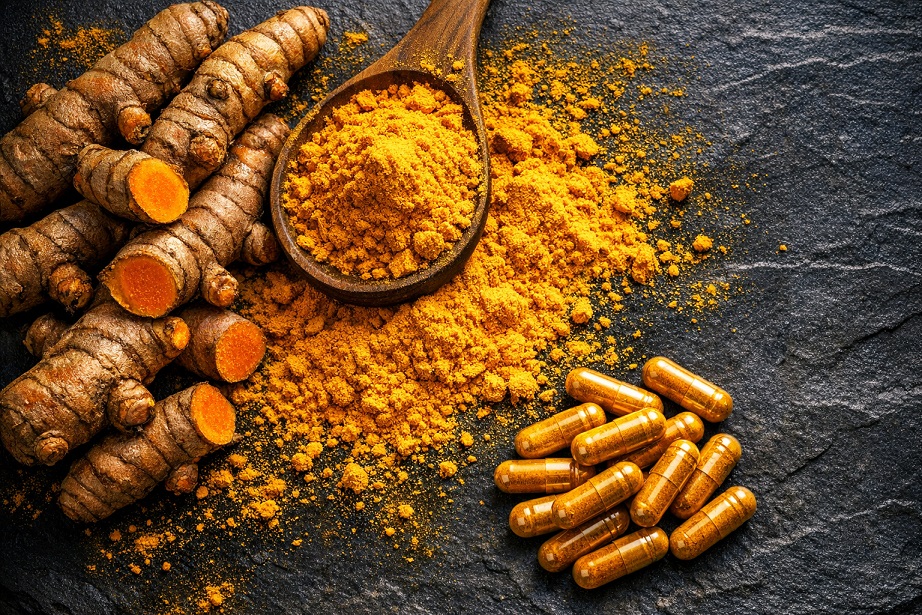
Turmeric has been a staple of South Asian cooking and medicine for thousands of years, but it has spent the last few decades earning something it never needed before: scientific credibility in the Western research tradition. The compound responsible for most of that attention is curcumin, the bright yellow pigment that gives turmeric its characteristic color and most of its biological potency. If you’ve ever wondered whether the enthusiasm around turmeric for joint health is warranted or simply the latest wellness trend dressed in golden packaging, the research tells a clear and genuinely interesting story. Curcumin doesn’t just reduce the perception of joint pain. It engages the biological machinery of inflammation at the source, targeting the molecular switches and enzymatic pathways that drive cartilage damage, synovial inflammation, and the chronic joint discomfort that makes everyday movement a negotiation.
What “Fighting Inflammation at the Source” Actually Means
Most people understand inflammation as a symptom: joints that swell, ache, and feel warm to the touch. But these sensations are the downstream output of a complex cascade of molecular events that begins long before any tissue damage becomes obvious or any pain signal reaches conscious awareness. Inflammatory processes in joints are orchestrated through signaling molecules, transcription factors, and enzymes that work together to amplify an initial stimulus, whether mechanical damage, accumulated debris in the joint space, or systemic inflammatory signals, into a sustained biological state of tissue remodeling and cellular activation.
Addressing inflammation “at the source” means targeting these upstream regulatory mechanisms rather than simply blocking the output signals that produce symptoms. A painkiller that blocks the perception of pain is not fighting inflammation at the source; it is silencing the alarm while the fire burns on. Curcumin’s significance lies in the fact that it acts upstream, at the level of the molecular switches that determine whether inflammatory genes are expressed and inflammatory enzymes are activated in the first place.
NF-kB: The Master Switch Curcumin Hits First
The central upstream regulator of the inflammatory response in joint tissue is a protein complex called nuclear factor kappa B, mercifully abbreviated as NF-kB. NF-kB is a transcription factor, a molecule that travels to the nucleus of a cell and activates the expression of entire programs of genes. When NF-kB is switched on in synoviocytes and chondrocytes, it triggers the production of inflammatory cytokines including interleukin-1 beta (IL-1β) and tumor necrosis factor-alpha (TNF-α), pro-inflammatory enzymes including COX-2 and 5-LOX, and matrix metalloproteinases (MMPs) that actively degrade the collagen and proteoglycan matrix of cartilage. The consequences of NF-kB activation, in other words, are comprehensive: they inflame the joint, sensitize pain receptors, and simultaneously break down the structural tissue of the joint itself.
Curcumin inhibits NF-kB activation through multiple mechanisms, including blocking the kinase enzymes that trigger its release from its inhibitory protein complex and preventing its translocation to the cell nucleus where it would activate inflammatory gene expression. This upstream inhibition is why curcumin has such broad anti-inflammatory effects across many pathways simultaneously: by dampening the master switch, it reduces the expression of the entire downstream inflammatory program that NF-kB controls. This is fighting inflammation at the source in the most literal molecular sense.
COX-2 and 5-LOX: The Enzyme Targets That Explain Curcumin’s Pain Relief
Beyond NF-kB, curcumin directly inhibits two enzyme families that are among the most important targets in inflammatory joint disease. Cyclooxygenase-2, or COX-2, is an enzyme that converts arachidonic acid into prostaglandins, the lipid mediators most directly responsible for joint pain, swelling, and fever. COX-2 is the same enzyme targeted by pharmaceutical anti-inflammatories including celecoxib and by traditional NSAIDs like ibuprofen, which is part of why curcumin has been compared to these drugs in clinical research for joint pain outcomes.
The second enzyme family, 5-lipoxygenase or 5-LOX, converts arachidonic acid along a parallel pathway into leukotrienes, inflammatory mediators that recruit immune cells into the joint space and amplify the inflammatory response through mechanisms distinct from prostaglandins. Many NSAIDs address COX pathways but leave 5-LOX largely untouched. Curcumin inhibits both, meaning it provides broader coverage of the inflammatory enzyme landscape than most pharmaceutical alternatives. This dual coverage is one reason that clinical comparisons between high-bioavailability curcumin and conventional anti-inflammatory drugs have occasionally found the botanical performing surprisingly well on outcome measures.
Protecting Cartilage Through MMP Suppression
The inflammatory signals that curcumin suppresses are not merely responsible for pain; they are direct drivers of cartilage structural destruction. NF-kB-driven MMP production leads to enzymatic degradation of Type II collagen and aggrecan, the two primary structural molecules of cartilage matrix. When curcumin reduces NF-kB activation and inflammatory cytokine production, it simultaneously reduces the stimulation of these cartilage-degrading enzymes. Studies examining cartilage degradation markers in osteoarthritis patients have found that curcumin supplementation reduces these markers, suggesting that its anti-inflammatory effects extend to measurable protection of cartilage structural integrity. This distinction between symptomatic relief and structural protection is the difference between treating the complaint and addressing what is causing it.
Clinical Evidence: What Studies Have Actually Found
The clinical research on curcumin for joint health has grown substantially over the past two decades, and the findings are more compelling than is often acknowledged in mainstream medical discussions. A frequently cited study comparing curcumin to ibuprofen in knee osteoarthritis patients found the two to be comparable in reducing pain and improving function, with curcumin better tolerated by participants with gastrointestinal sensitivity. A separate study published in Phytotherapy Research found curcumin superior to a conventional anti-inflammatory drug on several outcome measures in patients with rheumatoid arthritis. The Phytomedicine study comparing a curcumin-boswellia combination to celecoxib found the botanical pair performing comparably or better than the pharmaceutical on pain scores, joint tenderness, and walking distance.
These outcomes are not produced by every curcumin product on the market. They are produced by high-bioavailability curcumin extracts used at appropriate doses, a distinction that matters enormously given how poorly standard curcumin is absorbed. The studies achieving pharmaceutical-comparable results used enhanced delivery forms that increase curcumin’s absorption dramatically compared to plain turmeric powder, making the form of the ingredient at least as important as its presence on a label.
Why Standard Turmeric Falls Short
Eating turmeric regularly is a worthwhile dietary habit with contributions to an overall anti-inflammatory dietary pattern. But therapeutic-level effects on joint inflammation require concentrations of curcuminoids in the bloodstream that culinary turmeric simply does not achieve. Standard curcumin is hydrophobic, metabolized rapidly in the gut and liver, and excreted before reaching meaningful systemic concentrations. Studies measuring blood curcuminoid levels after consumption of plain turmeric powder consistently find very low bioavailability.
Enhanced delivery technologies have addressed this limitation with varying degrees of success. Phospholipid-bound curcumin complexes improve membrane permeability and absorption meaningfully. Water-dispersible curcumin formats that convert the hydrophobic compound into an aqueous suspension improve gut-phase absorption dramatically. The most effective approaches achieve absorption twenty to forty-six times greater than standard curcumin, which is the difference between a compound that circulates in meaningful concentrations and one that is largely eliminated before it can act on joint tissue. You can see how inflammation is affecting your own health by taking an inflammation risk quiz.
Using Curcumin as Part of a Joint Health Strategy
Curcumin works best when it is part of a multi-mechanism joint health approach rather than deployed in isolation as a single intervention. Its anti-inflammatory effects complement the structural support provided by glucosamine and glycosaminoglycan ingredients, and they combine particularly well with boswellia, which addresses the 5-LOX and HLE pathways that curcumin moderates through somewhat different mechanisms. Together these botanicals provide broader inflammatory pathway coverage than either achieves alone, which is the principle that explains their combined use in most well-formulated joint health supplements.
Consistency over time is essential. Curcumin’s effects accumulate over weeks of daily use rather than appearing dramatically after a single dose. The analogy of compound interest applies here: modest daily anti-inflammatory activity, applied consistently, produces meaningful cumulative protection for joint tissue in ways that occasional use never can. For joints that matter, which is all of them, that consistency is the investment worth making.