
Every so often, a plant cuts through the noise of the wellness world and earns genuine, sustained attention rather than the fifteen-minute flash of a trend. Graviola is doing exactly that right now, and unlike many ingredients that achieve momentary popularity on the strength of a single dramatic claim, graviola’s moment is being built on something considerably more durable: a rich cultural history, a diverse nutritional profile, a growing body of published research, and a flavor that makes the whole thing rather enjoyable to engage with.
If graviola is a new name to you, or if you’ve heard it mentioned but haven’t yet had a chance to understand what all the conversation is actually about, this is the introduction worth reading. Graviola is not a laboratory creation or a novel compound synthesized in pursuit of a health trend. It is a fruit that has been growing in tropical climates and finding its way into the healing practices of diverse cultures for centuries. What’s new isn’t the plant. It’s the rest of the world catching on.
Graviola and Soursop: Sorting Out the Names
One of the first things that tends to confuse people new to graviola is the naming situation, which can make reading about the plant feel like following a conversation where everyone keeps changing what they call the same person. Graviola, soursop, guanábana, guyabano, corossol: these are all names for the fruit of a single tree, Annona muricata, and the name used in any given context depends almost entirely on the language and region of whoever is speaking.
Graviola is the Portuguese name, used most commonly in Brazil and throughout the Portuguese-speaking world, where the plant has been a fixture of traditional medicine and everyday cooking for generations. Soursop is the English name, prevalent across the Caribbean, the United Kingdom, and other English-speaking regions. Guanábana is the Spanish name, used throughout Latin America and the Caribbean’s Spanish-speaking communities. None of these names implies a different species, a different formulation, or a different set of properties. They are regional labels for the same remarkable plant, and understanding that resolves most of the initial confusion new readers encounter when they start following graviola’s story across different sources.
Where Graviola Comes From and Why That Matters
Graviola originates in the tropical regions of the Americas, with its native range spanning the Caribbean islands, Central America, and northern South America. From those origins, it spread through centuries of trade, migration, and deliberate cultivation to West Africa, Southeast Asia, and Pacific island communities, each of which absorbed it into their own agricultural and healing traditions. Today, the Annona muricata tree grows across a broad equatorial band, flourishing in the warm, humid conditions it prefers and producing fruit that can weigh up to five pounds when fully ripe.
The origin matters for reasons that go beyond geography. A plant that spread across multiple continents and became embedded in the independent healing traditions of geographically separated cultures did so because people with no scientific framework for evaluating botanical efficacy kept finding it useful. Caribbean communities reached for soursop leaf tea for sleeplessness and digestive complaints. West African traditional medicine incorporated the leaves and bark for inflammatory and infectious conditions. South American healers worked with the fruit, leaves, roots, and seeds across a broad range of wellness applications. This isn’t coincidence. It’s the accumulated outcome of generations of empirical observation about a plant that keeps delivering enough to earn its continued use.
What the Graviola Plant Actually Looks Like
There is something undeniably striking about encountering a graviola fruit for the first time. The tree itself grows to a modest height, typically between fifteen and thirty feet, with glossy, dark green leaves and small, pale yellow flowers with a faintly sweet fragrance. The fruit that follows those flowers is what tends to stop people in their tracks: large, irregularly heart-shaped, and covered in soft, curved green spines that look more dramatic than they feel. A mature graviola fruit can be roughly the size of a football, and its interior is something of a revelation after that unpromising exterior.
Inside the Fruit
Cut a graviola open and you find white, fibrous, segmented pulp surrounding a core of smooth black seeds. The pulp is juicy and aromatic, and the flavor delivers on that promise in a way that surprises most first-time tasters. It is sweet but not cloying, with a tropical complexity that combines pineapple, strawberry, and coconut notes around a gentle citrus tartness that keeps the whole experience from becoming too rich. In many tropical countries, this pulp is blended into fresh juices, churned into ice cream, folded into desserts, or simply scooped out and eaten with a spoon, which is arguably the most honest way to appreciate it.
Beyond the Fruit: What the Rest of the Tree Offers
One of the more fascinating aspects of graviola’s cultural history is that the fruit represents only one part of the plant’s wellness story. The leaves have attracted the most concentrated scientific research attention, largely because they contain the highest concentrations of the bioactive compounds, particularly the annonaceous acetogenins, that give the plant much of its pharmacological interest. The bark, roots, and seeds have also featured in various traditional applications, though the fruit and leaves remain the primary focus of both traditional use and contemporary supplement formulation. When you encounter a graviola supplement that specifies leaf extract as a key ingredient, it is drawing on what is arguably the most potent part of the plant’s arsenal.
The Science That Has the Health World Paying Attention
Graviola’s move from a tropical fruit known primarily within Caribbean, Latin American, and African communities to a genuine preoccupation of the international health world has been substantially driven by scientific research. The volume of published work on Annona muricata has grown considerably over the past two decades, spanning pharmacology, nutritional science, microbiology, and oncology, and it has collectively painted a picture of a plant with a broader and more sophisticated range of biological activity than its humble origins as a backyard fruit tree might suggest.
The antioxidant capacity of soursop has been confirmed across multiple studies, with both fruit and leaf extracts demonstrating significant free radical scavenging activity driven by vitamin C, phenolic acids, flavonoids including quercetin, luteolin, and rutin, and the unique acetogenin compounds. Anti-inflammatory activity has been demonstrated in animal models through specific mechanisms involving cytokine inhibition and inflammatory enzyme suppression. Antimicrobial properties have been confirmed against a range of bacterial and fungal strains in laboratory testing. Blood sugar modulating effects have been observed in diabetic animal models. Neuroprotective potential has been raised by studies examining the plant’s effects on oxidative stress in neural tissue. Each of these findings represents a thread in a tapestry of scientific interest that is still being woven, and the pattern emerging from it is one of a plant that genuinely warrants the serious attention it is receiving.
Why “Obsession” Is Actually the Right Word
The health world’s relationship with graviola has the quality that distinguishes a genuine obsession from a passing enthusiasm: the more you learn, the more interested you become. Every layer of the plant’s story, its cultural roots, its flavor, its nutritional complexity, its unique bioactive compounds, its research profile, leads to another layer worth understanding. People who start by reading about soursop’s antioxidant properties find themselves drawn into the acetogenin research. Those who discover graviola through its traditional use in the Caribbean find themselves reaching for the ethnobotanical literature. Those who try it first in a gummy and find they enjoy it start asking questions about where it comes from and why it works.
That layered depth is rare in the supplement world, where most trending ingredients are one-dimensional enough that understanding them fully takes about ten minutes and then there’s nothing left to know. Graviola rewards continued inquiry in a way that keeps both researchers and wellness consumers engaged across years rather than weeks. It has history. It has chemistry. It has cultural resonance. It has genuine practical relevance to the health concerns most people are actually navigating. That combination doesn’t produce a trend. It produces an obsession, and the health world’s version of that is entirely deserved.
How to Bring Graviola into Your Own Routine
For most people reading this article, fresh graviola is not a realistic daily option. The fruit’s short shelf life and limited availability outside tropical growing regions make consistent access genuinely difficult. That’s where well-formulated supplements close the gap between a remarkable plant and a practical daily habit.
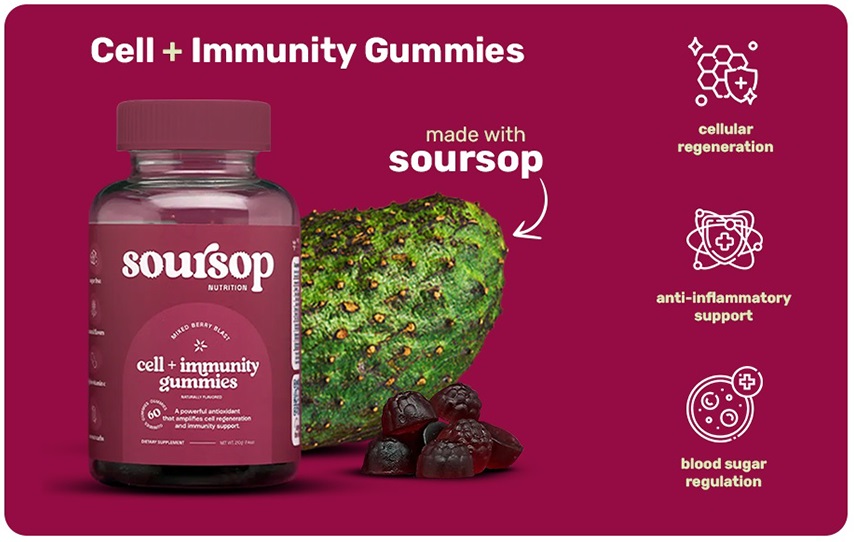
Graviola supplements are available in several formats, including capsules, liquid extracts, teas, and gummies. Each has its place, but gummies have become particularly popular for reasons that behavioral research on habit formation makes easy to understand: they’re enjoyable to take, require no preparation, and introduce essentially no friction into the process of building a consistent daily routine. A quality graviola gummy made with standardized leaf extract, natural sweeteners, and third-party verified potency gives you reliable access to the plant’s most important bioactive compounds in a format that makes consistency genuinely achievable.
Getting to know graviola properly takes a little time, because the plant is generous enough with its story that a single article, however thorough, can only introduce the conversation. But introduction is where every worthwhile relationship begins, and graviola is precisely the kind of botanical that rewards the time you invest in understanding it. The health world figured that out, and right now, so are you.
Frequently Asked Questions
Here are the questions people ask most often when they first encounter graviola and want to quickly get their bearings on what it is and why it matters.
Is Graviola the Same Thing as Soursop?
Yes, completely. Graviola and soursop are two names for the same fruit of the Annona muricata tree. Graviola is the Portuguese name used primarily in Brazil and the broader Portuguese-speaking world, while soursop is the English name common in the Caribbean and other English-speaking regions. You will also encounter guanábana in Spanish-speaking contexts. All three names refer to the same plant, the same compounds, and the same health properties.
What Part of the Graviola Plant Is Most Beneficial?
Both the fruit and the leaves offer meaningful benefits, but research consistently finds that the leaves contain higher concentrations of the acetogenins and certain flavonoids most associated with graviola’s health-supporting properties. Fruit extract provides the vitamins, minerals, and antioxidants of the fruit itself. The most comprehensive supplement formulations incorporate both to capture the full range of what the plant offers.
Why Has Graviola Become So Popular Recently?
Several forces have converged to bring graviola into the mainstream health conversation: a growing body of published scientific research, the spread of authentic knowledge through diaspora communities and social media, a broader cultural shift toward traditional and plant-based wellness approaches, and the development of quality supplement formats that make daily graviola intake accessible to people who don’t live in tropical regions. The interest is not manufactured. It reflects a plant whose genuine properties have finally found a global audience ready to appreciate them.
How Does Graviola Taste?
Fresh graviola pulp has a flavor that surprises most first-time tasters with its complexity and appeal. It is sweet with a gentle tartness, layering tropical notes of pineapple, strawberry, and coconut in a combination that is both refreshing and distinctive. The flavor translates naturally into supplement formats like gummies, making graviola one of the more culinarily agreeable botanicals in the supplement world.
Is Graviola Safe for Long-Term Daily Use?
For most healthy adults taking graviola supplements at manufacturer-recommended doses, the plant is generally considered safe for ongoing daily use. Some research has raised questions about the effects of very high doses taken over extended periods, particularly related to certain alkaloid compounds present in the plant. Staying within recommended dosages and consulting a healthcare provider before beginning any new supplement routine, especially if you are pregnant, nursing, or managing existing health conditions or taking medications, is always the sensible approach.