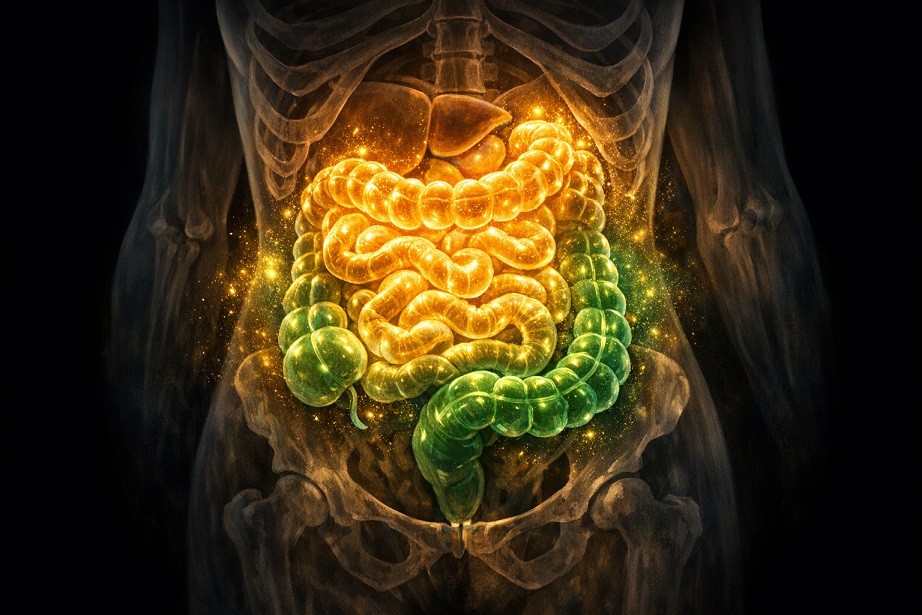
Nutrition education teaches us to think about vitamins as substances we obtain from food: folate from leafy greens, B12 from animal products, riboflavin from dairy. This food-centric model is accurate as far as it goes, but it leaves out a biological production facility that operates continuously inside the human body and contributes meaningfully to the supply of several critical vitamins. That facility is the gut microbiome, and among the most active vitamin producers within it is Bifidobacterium.
The idea that gut bacteria produce vitamins we absorb and use is not new to microbiologists. It has been recognized for decades that the gut microbiome contributes to the host’s nutritional status through biosynthesis. What has become clearer through more recent research is the specific contribution of Bifidobacterium, the extent to which gut microbial vitamin production can meaningfully supplement or compensate for dietary intake, and what happens to vitamin status when Bifidobacterium populations are reduced. The picture that emerges is one where nutritional adequacy is more dependent on the health of the gut microbial community than dietary analyses typically account for.
Folate: The B-Vitamin Most Clearly Linked to Bifidobacterium
Folate, the naturally occurring form of vitamin B9, is essential for DNA synthesis, cell division, amino acid metabolism, and the methylation reactions that influence gene expression throughout the body. It is particularly critical during pregnancy for neural tube development, making folate status a matter of significant public health concern. The recommended dietary allowance for folate is 400 micrograms daily for most adults, rising to 600 micrograms during pregnancy, and deficiency is associated with megaloblastic anemia, elevated homocysteine levels, and increased risk of colorectal cancer.
Bifidobacterium as a Folate Producer
Multiple Bifidobacterium species have been demonstrated to synthesize folate de novo within the gastrointestinal tract. The folate biosynthesis genes in these species encode the full pathway from the precursor compound GTP through the folate molecule, meaning Bifidobacterium does not require dietary folate to produce it but can synthesize it from simpler metabolic building blocks. Bifidobacterium longum, Bifidobacterium adolescentis, and several other species have been specifically characterized for folate production capacity.
Studies measuring folate concentrations in gut contents have found positive correlations between Bifidobacterium abundance and local folate levels, and research examining the relationship between gut microbiome composition and systemic folate status in humans has found associations consistent with meaningful microbial folate contribution to host nutrition. While gut-produced folate is not a complete substitute for dietary folate, its contribution is real and represents a nutritional dividend from maintaining robust Bifidobacterium populations that standard dietary assessments do not capture.
Riboflavin (Vitamin B2): Energy Metabolism Support
Riboflavin is a water-soluble B-vitamin that serves as the core component of two essential coenzymes, flavin mononucleotide and flavin adenine dinucleotide, which are required for energy production in virtually every cell in the body. Riboflavin is involved in the metabolism of fats, carbohydrates, and proteins, and supports the activity of numerous enzymes involved in antioxidant defense and iron metabolism. Deficiency produces characteristic symptoms including cracked lips, oral ulcers, and sensitivity to light, and marginal insufficiency is more common than clinical deficiency figures suggest.
Several Bifidobacterium species produce riboflavin as a metabolic byproduct, and research has documented riboflavin production in Bifidobacterium longum, Bifidobacterium bifidum, and related strains. Like folate production, the riboflavin biosynthesis capacity of Bifidobacterium means that a thriving Bifidobacterium community contributes to the host’s riboflavin supply through an endogenous production route that operates continuously and independently of dietary intake on any given day.

Thiamine (Vitamin B1) and Biotin (Vitamin B7)
Thiamine is essential for carbohydrate metabolism and neural function, serving as a coenzyme in key reactions of the citric acid cycle and in the pentose phosphate pathway that generates ribose for nucleotide synthesis. It is particularly critical for the nervous system, and thiamine deficiency produces serious neurological conditions. Gut bacteria including certain Bifidobacterium species synthesize thiamine, contributing to the pool of this vitamin available in the gastrointestinal environment.
Biotin, the vitamin most commonly associated with hair and nail health in popular culture, has more fundamental roles as a coenzyme in fatty acid synthesis, gluconeogenesis, and amino acid metabolism. It is synthesized by several gut bacterial species, and gut-produced biotin is absorbed from the colon and contributes to systemic biotin status. The contribution of gut microbial biotin synthesis to overall biotin nutrition is significant enough that the biotin recommended intake for humans is set with the assumption that gut bacteria will provide a portion of the daily requirement. Disruption of the gut microbiome can therefore directly compromise biotin status in ways that are not apparent from dietary intake assessment alone.
Vitamin K2: The Cardiovascular and Bone Protection Vitamin
Vitamin K exists in two main forms: K1 (phylloquinone), found primarily in green vegetables and involved in blood clotting, and K2 (menaquinone), which is the form most relevant to bone mineralization and cardiovascular protection. K2 activates matrix Gla protein in arterial walls, preventing calcium deposits in arteries, and activates osteocalcin in bone tissue, facilitating proper calcium incorporation into bone matrix. The menaquinone forms of K2, particularly MK-7 and MK-8, are produced by gut bacteria.
Bifidobacterium and related lactic-acid bacteria in the gut synthesize menaquinones as byproducts of their menaquinone respiratory chain. Research has found that gut bacteria are a significant source of vitamin K2, with menaquinone levels in gut contents correlating with bacterial activity. Some of this gut-produced K2 is absorbed in the colon and contributes to systemic K2 status, supplementing the dietary K2 obtained primarily from fermented foods and some animal products. Given that K2 deficiency or insufficiency is associated with arterial calcification and reduced bone mineral density, the gut microbial contribution to K2 status has practical implications for cardiovascular and bone health outcomes.
The Nutritional Status Implications of Bifidobacterium Decline
The vitamin synthesis capacity of Bifidobacterium has a practical implication that most nutritional assessments miss: when Bifidobacterium populations decline, whether through aging, antibiotic use, or inadequate dietary fiber, the gut’s vitamin production capacity declines alongside them. This means that two people eating identical diets may have meaningfully different vitamin status depending on the health and abundance of their gut Bifidobacterium community.
This nutritional consequence of microbiome disruption is particularly significant in populations already at elevated nutritional risk, including older adults who have lower dietary intake, reduced absorption efficiency, and reduced Bifidobacterium populations simultaneously. The triple convergence of these factors can produce vitamin inadequacy that dietary assessment alone underestimates because it does not account for the gut microbial production that was contributing to adequacy when the microbiome was healthier.
Supporting Bifidobacterium populations through consistent prebiotic Inulin-FOS supplementation therefore has a nutritional dimension that extends beyond the gut itself. The bacterial populations that are nourished by this fiber are not only improving digestive function and immune support. They are also maintaining a vitamin synthesis capacity that contributes to the nutritional adequacy that the rest of the body depends on to function at its best.