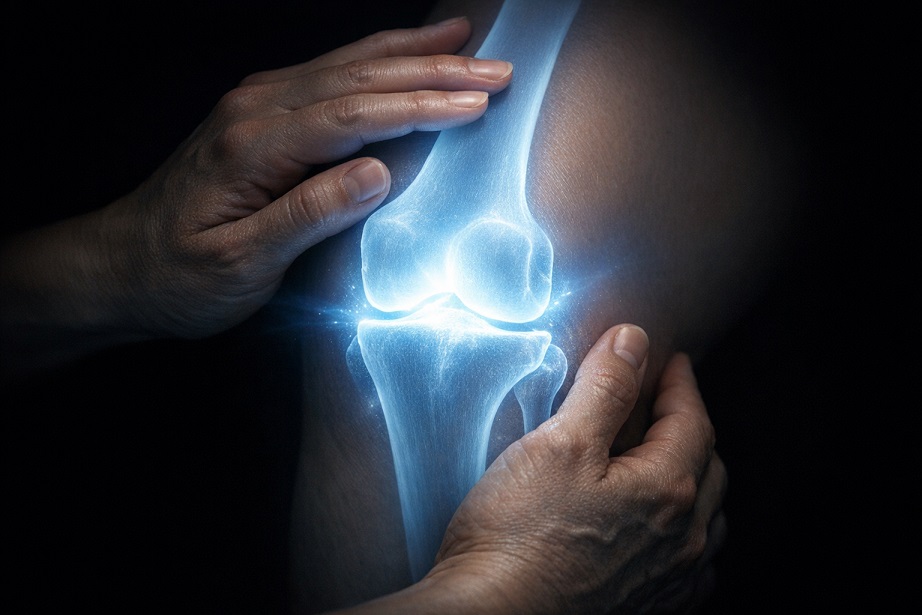
There is a meaningful difference between joints that merely function and joints that are resilient. Functional joints can get you through a typical day. Resilient joints can handle the demands of an active life, including the occasional unexpected demand, without becoming the limiting factor in what you choose to do. They recover well from hard efforts, adapt positively to training stress, and maintain their capacity decade after decade rather than quietly declining until symptoms finally prompt attention. Building resilient joints is not the same as preventing joint disease, though it substantially reduces the risk of it. It is an active process of developing the structural quality, biochemical environment, and adaptive capacity that allows joint tissue to absorb life’s demands and bounce back reliably.
Resilience Is a System Property
The first thing to understand about joint resilience is that it isn’t located in any single tissue. A cartilage-focused approach alone, or a supplement-only strategy, or a training-only intervention misses the integrated nature of what makes a joint truly durable. Resilient joints are the product of multiple tissue types, each in good condition and functioning cooperatively. Strong, well-conditioned periarticular muscles absorb and redirect forces that would otherwise concentrate on cartilage surfaces. Healthy, well-organized tendons transmit muscular forces efficiently without accumulating microtrauma. Pliable, appropriately tensioned ligaments constrain joint movement within safe ranges without overstretching under load. And healthy cartilage and synovial fluid provide the bearing surface and lubrication that allow all this mechanical activity to proceed without friction-driven wear.
When any one of these components is compromised, the others bear a greater share of the load. Weak quadriceps increase cartilage stress in the knee. Degraded synovial fluid increases contact friction and cartilage wear. Inelastic ligaments after old injuries alter joint mechanics in ways that concentrate stress unevenly across cartilage surfaces. True joint resilience requires attending to all these components simultaneously rather than optimizing one while neglecting the others.
Muscle Strength as the Foundation of Joint Resilience
If there is a single physical factor most predictive of long-term joint resilience, it is the strength of the muscles crossing the joint. Strong muscles are the primary shock absorbers of the musculoskeletal system, intercepting and redirecting mechanical forces before they reach the passive joint structures. Research consistently shows that greater quadriceps strength is associated with reduced knee cartilage loss over time, lower rates of osteoarthritis progression, and better functional outcomes in people who already have joint disease. Similar relationships hold for hip abductor strength and hip joint health, rotator cuff strength and shoulder joint integrity, and paraspinal muscle strength and spine health.
Building and maintaining muscle strength around major joints is therefore the most structurally important physical investment in joint resilience available. Resistance training two to four times per week, with specific attention to the muscles that support the joints most under demand in a person’s life, creates a physical buffer against the mechanical stresses that would otherwise translate directly into joint tissue damage. Importantly, this benefit is not lost in older adults: studies consistently show that resistance training improves muscle mass, joint function, and mobility in people well into their seventies and eighties, making it a worthwhile investment at any age.

Progressive Loading: Teaching Tissue to Adapt
Joint tissues, including cartilage, tendons, and ligaments, are not passive structures that simply wear down under use. They are adaptive tissues that respond to mechanical loading by remodeling their structure to better resist the demands placed on them. Tendons subjected to progressive tensile loading increase their collagen content and organizational alignment. Cartilage in appropriately loaded joints maintains better proteoglycan content and hydration than cartilage in immobilized joints. The bone beneath cartilage adapts its architecture in response to habitual loading patterns.
The key word in all of this is “progressive.” Tissue adaptation requires time. Loading that exceeds the current adaptive capacity of joint tissue produces damage rather than adaptation, and loading that increases too rapidly doesn’t allow the tissue remodeling time to keep pace with the demands. This is the biological explanation for the training principle of gradual progressive overload: increasing the demands on joint tissue slowly enough that remodeling can stay ahead of damage accumulation. It is also why sudden large increases in training volume, the classic “too much too soon” error, so reliably produce overuse joint injuries.
Recovery as an Active Component of Resilience
Resilience is not built during loading; it is built during recovery from loading. The adaptive responses to training stress, including collagen remodeling in tendons and ligaments, proteoglycan synthesis in cartilage, and bone remodeling, occur during rest periods following the mechanical stimulus of exercise. Adequate recovery time between significant joint-loading efforts, and adequate sleep during which growth hormone-driven tissue repair is most active, are as important to building joint resilience as the training itself. People who train without adequate recovery accumulate microtrauma faster than their tissues can repair it, producing a chronic deficit that eventually manifests as pain, injury, or accelerated structural deterioration.
The Biochemical Environment of a Resilient Joint
Physical training and structural tissue quality create the mechanical basis of joint resilience. But the biochemical environment in which joint tissue exists determines how well it maintains itself and responds to adaptive stimuli. A chronically inflamed joint operates in a biochemical environment that suppresses chondrocyte repair activity, accelerates cartilage-degrading enzyme production, and undermines the adaptive responses that physical loading is supposed to stimulate. Building joint resilience therefore requires maintaining a biochemical environment that supports adaptation rather than one that fights it.
Anti-inflammatory dietary patterns, rich in omega-3 fatty acids, antioxidant-dense produce, and olive oil, while low in refined carbohydrates and industrial seed oils, reduce the systemic inflammatory burden that bleeds into joint environments. Targeted supplementation with curcumin and boswellia addresses the specific inflammatory pathways that most directly impair chondrocyte function and accelerate cartilage matrix degradation. MSM provides the sulfur substrate that connective tissue synthesis depends on continuously. And glucosamine sulfate, with its evidence for slowing structural cartilage loss, represents the nutritional analog of maintenance work: supporting the ongoing synthesis of the proteoglycan matrix that keeps cartilage thick, hydrated, and functionally capable of absorbing load.
Resilience Is Also About Knowing Your Limits
There is one aspect of joint resilience that the physical and nutritional components cannot replace: intelligent load management. Even the most well-conditioned joints have load tolerances, and consistently exceeding them, however good your training program and however comprehensive your supplementation, eventually produces damage that resilience cannot overcome. The people with the most durable joints over decades are typically not those who trained the hardest without regard to recovery; they are those who developed an accurate and responsive understanding of how much their joints could handle, when to push and when to back off, and how to modify activities when warning signals appeared rather than pushing through them.
Pain that persists beyond normal post-exercise soreness, swelling that doesn’t resolve between sessions, or joint symptoms that progressively worsen with continued loading are signals worth respecting rather than overriding. Joint resilience is built through intelligent engagement with stress and recovery over the long haul, not through the short-term heroics of refusing to acknowledge limits. The goal is to be still moving freely and comfortably decades from now, and that goal is best served by the patient, consistent, multi-component approach that builds durable tissue rather than the aggressive approach that exhausts it.