
Your first telehealth evaluation is a conversation with a licensed clinician by video, phone, or secure message, and it is often simpler than people expect. You share your health history and goals, the clinician asks follow-up questions, and together you decide on next steps. Here is how to prepare, what the visit usually covers, and what comes afterward.
How to Prepare for Your First Telehealth Evaluation
A little preparation makes your first evaluation smooth and productive. HHS suggests choosing a quiet spot with good internet, testing your device ahead of time, and signing on early in case the video needs a moment. Write down your medications and doses, your concerns and questions, recent readings such as weight or blood pressure, and any allergies. Keep paper and a pen nearby for notes. If you need accommodations such as closed captioning, tell your provider in advance. Many people feel more relaxed taking the visit from a familiar room at home, with everything within reach. A short checklist helps:
- Medications, supplements, and doses
- Allergies and past reactions
- Your goals and top questions
What Happens During Your First Telehealth Evaluation
The visit feels like a focused conversation. Your clinician starts with your health history, current symptoms, and what you hope to achieve. According to the American Heart Association, a provider may ask about areas such as breathing, stomach or chest discomfort, mood or memory changes, joint and muscle pain, and skin changes. A virtual exam can be simple. You may be asked to stick out your tongue, show a rash or bump, or move your neck or limbs so the clinician can see how they look and feel. An independent licensed clinician makes the decisions, so this is the time to ask questions and share what matters to you.
What Comes After Your First Telehealth Evaluation
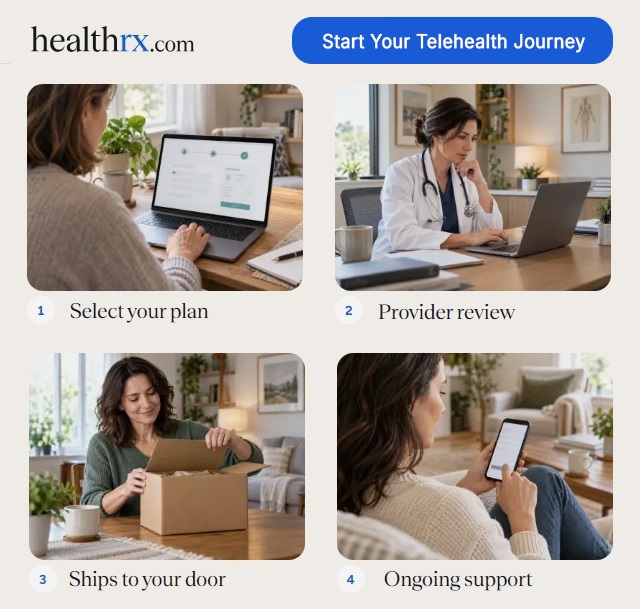
After the visit, your clinician explains the next steps. The American Heart Association notes that a provider may request bloodwork or an in-person follow-up appointment, which helps round out the picture of your health. If a prescription is appropriate, a licensed pharmacy prepares it and delivers it to your door. The FDA says an online pharmacy is likely safe when it requires a prescription, lists a physical U.S. address and phone number, has a licensed pharmacist available, and is licensed by a state board of pharmacy. Ask who will schedule your next visit, and whether you should call the office or wait for them to call you. A clear follow-up plan keeps your care on track.
Frequently Asked Questions
How Long Does a First Telehealth Evaluation Take?
Length varies by service and clinician. Having your medications, history, and questions ready helps the visit move smoothly, and your service can tell you what to expect when you schedule your evaluation.
Will My Clinician Examine Me Over Video?
Often a virtual exam is simple. According to the American Heart Association, you may be asked to show a rash, stick out your tongue, or move a joint so the clinician can see how it looks and feels.
What Should I Have Ready Before My Visit?
Have your medications and doses, allergies, recent readings such as weight or blood pressure, and your questions ready. Keep paper and a pen nearby, and test your device and internet beforehand.
Will I Need Lab Work After My Evaluation?
Sometimes. A provider may request bloodwork or an in-person follow-up after a telehealth visit, depending on your history and goals. Your clinician explains what is needed and why.
Good to Know
Telehealth is not right for every situation. Emergencies, severe symptoms, and conditions that need a hands-on exam call for in-person care, so call 911 or go to the nearest emergency room when needed. Tell your clinician about all medications, allergies, and conditions, and mention if you are pregnant or breastfeeding. Side effects depend on any medication prescribed, and your clinician reviews them with you. Avoid sites that sell prescription drugs without a prescription.
Take the Next Step With a Licensed Clinician
Ready for your first evaluation? Complete an online assessment, have an independent licensed clinician review your health history, and, when a prescription is appropriate, receive your medication from a licensed pharmacy that delivers to your door. Take the first step today and explore your options.
This article is for education only and is not medical advice.