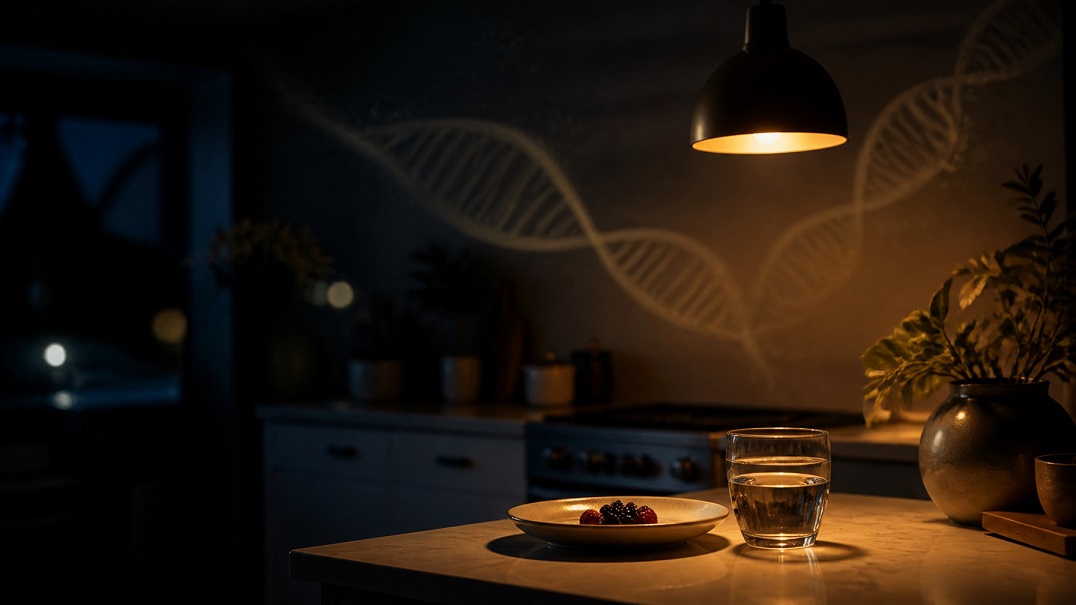
By any reasonable measure, my daytime eating was fine. Balanced meals, reasonable portions, hardly any snacking between breakfast and dinner. Then somewhere around nine at night, almost without fail, I’d find myself standing in front of the open pantry looking for something, anything, even when I genuinely wasn’t hungry an hour earlier.
I tried to will it away for years. More willpower after dinner, distraction techniques, going to bed earlier just to avoid the window entirely. Nothing fully worked. The nighttime pull showed up with a consistency that made “just have more discipline” feel increasingly hollow as an explanation, especially given how disciplined the rest of my day genuinely was.
This is one version of a pattern I hear about constantly, the specific hour and specific foods changing but the late-evening pull staying remarkably consistent. Someone manages their eating carefully all day, then finds themselves fighting a very different kind of hunger once the sun goes down, and assumes it’s simply a lack of self-control catching up with them. Mine eventually got a more specific explanation, thanks to a DNA test that looked at timing rather than willpower.
The Nine O’Clock Pull
It wasn’t random. It showed up at roughly the same time most nights, regardless of what I’d eaten for dinner or how full I’d felt an hour earlier. I could have a genuinely satisfying meal and still feel that familiar pull by nine, which never made sense to me if hunger was simply about how much food I’d recently eaten.
My partner, who eats a similar dinner most nights, never experiences anything like it. He’ll finish eating and simply be done for the evening, no negotiation required. Watching that difference play out night after night made it hard to keep believing the gap between us was purely a matter of who had more self-control.
What made it more confusing was that daytime me had no trouble at all. I could skip a mid-afternoon snack without a second thought, stick to planned meals without much internal negotiation. Evening me was a completely different negotiator, and I never understood why the same brain and the same body behaved so differently depending on the hour.
Willpower After Dinner Never Held Up
I tried the standard advice, brushing my teeth right after dinner to signal the kitchen was closed, drinking tea instead of snacking, going to bed earlier to shrink the window entirely. Some nights these worked. Most nights, especially after a long day, my resolve wore thin exactly when the pull was strongest, which felt like the worst possible timing for willpower to be running low.
Looking back, that timing wasn’t a coincidence so much as the whole point. Whatever was driving the nighttime hunger seemed to intensify as the evening wore on, which meant my willpower and my hunger were moving in opposite directions at exactly the moment they needed to align.

What My Genes Actually Showed
A DNA test came into the picture through a broader weight and metabolism report, and I mostly expected the relevant section to be about food choices rather than timing. One section, though, covered how appetite hormones follow a daily rhythm, and how genetic variation can shift that rhythm later in the day for some people. That section explained the nine o’clock pull better than years of willpower strategies had.
Why Hunger Has a Body Clock of Its Own
The report explained that ghrelin, the hormone primarily responsible for triggering hunger, follows a daily rhythm influenced partly by genes involved in circadian regulation. In most people, ghrelin naturally rises before meals and falls afterward, but variations in circadian-related genes can shift that rhythm, producing a stronger hunger signal later in the evening regardless of how recently or how well someone has eaten. That was the mechanism I’d been missing. It wasn’t dinner failing to satisfy me. It was a hunger signal that ran on a slightly later internal schedule than the standard three-meals-a-day rhythm assumes.
Reading that reframed the entire nine o’clock pattern. It wasn’t a willpower failure showing up predictably every night. It was a hormonal rhythm doing exactly what it was built to do, just later than the schedule I was trying to force it into.
Why Fighting It With Willpower Made It Worse, Not Better
The report also touched on sleep’s role in this rhythm, noting that poor or inconsistent sleep can intensify evening ghrelin signaling further. That connected another dot. On nights I’d stayed up late or slept poorly the night before, the pull felt noticeably stronger, which lined up with a hormonal explanation far better than a discipline-based one ever had.
What Actually Changed
Understanding the rhythm changed how I planned around it instead of fighting it head-on. Rather than treating nine o’clock as a battle to win through sheer resolve, I started building in a genuinely satisfying, planned evening option, something with protein and fiber that could meet the hunger signal without derailing the rest of my eating. The hunger was real. Fighting it with willpower alone had just never been the right tool for a rhythm-based signal.
I also started paying more attention to sleep consistency, since it seemed to directly affect how strong the pull felt the following evening. That single adjustment did more for my nighttime eating than any teeth-brushing trick or after-dinner tea ever had.

What I’d Tell Someone Who’s Been There
If your eating feels genuinely under control all day and then falls apart at a consistent hour each evening, that pattern is worth paying attention to rather than filing under lack of discipline. Appetite hormones follow real daily rhythms, and those rhythms genuinely vary in timing from person to person.
That doesn’t mean nighttime eating is inevitable or unmanageable. It’s a reason to plan around the rhythm rather than treating every evening as a fresh battle against willpower, and worth a conversation with a doctor or dietitian if it’s significantly affecting your goals or sleep.
Nine o’clock still shows up most nights. I just meet it with a plan now, instead of a fight I was setting myself up to lose.
Questions People Ask After a Story Like This
Is this normal, or was this case unusual?
A predictable evening hunger pull despite well-managed daytime eating is a common experience, and genetic variation in the timing of appetite hormone signaling is a recognized contributor. It’s more widespread than the “no willpower after dark” framing usually suggests.
Does this mean nighttime eating is “just genetic”?
No. Genetics can influence the timing of hunger hormone signaling, but sleep quality, stress, and daytime eating patterns all still play a meaningful role. Genetics is better understood as one factor shaping your baseline rhythm, not a fixed, unchangeable pattern.
How would I know if something similar applies to me?
A pattern worth noticing is hunger that shows up at a consistent hour regardless of how recently or how well you’ve eaten, especially if it intensifies after poor sleep. That kind of timing-based consistency often points toward a hormonal rhythm rather than a lack of discipline.
What would a next step even look like?
For some people, that’s a conversation with a doctor or dietitian about appetite hormone patterns and sleep. For others, it starts with understanding the genetic factors behind hunger timing, which can make evening eating feel a lot less like a personal failing.