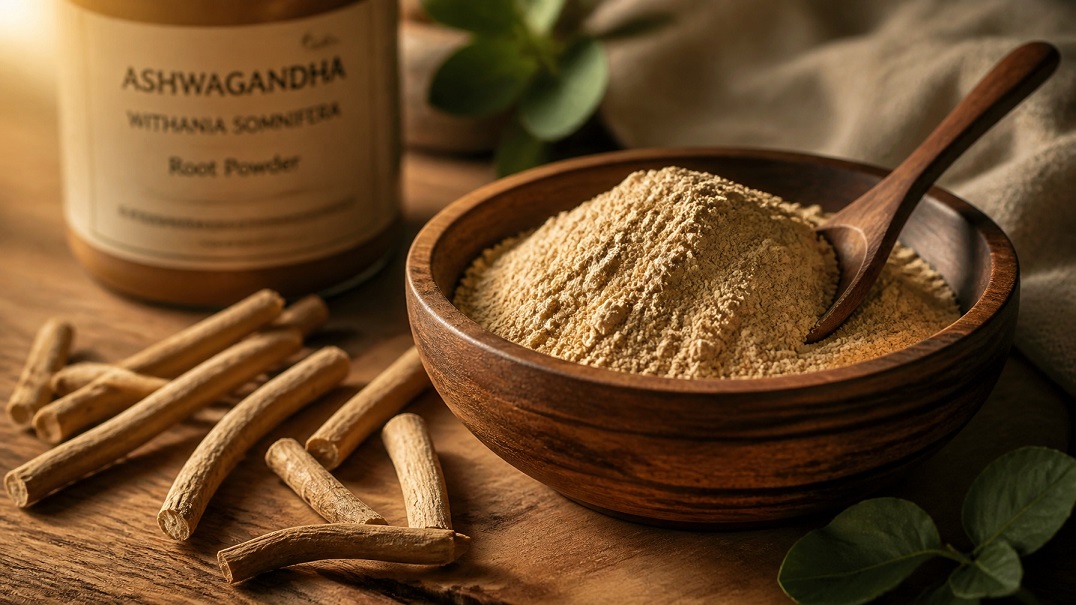
Yes, clinical research suggests ashwagandha can meaningfully improve muscle strength in men, particularly when combined with resistance training. A controlled study found that men taking ashwagandha alongside a structured weightlifting program gained significantly more strength and muscle size than men doing the identical training program with a placebo. This isn’t just a testosterone-related side effect either; the strength gains were substantial enough to stand on their own as a genuinely useful finding for anyone training seriously.
Here’s what the research actually measured and why the results were notable.
The Study Behind This Claim
A study published in the Journal of the International Society of Sports Nutrition followed 57 young men through an 8-week resistance training program. Half the group took 300 mg of ashwagandha root extract twice daily, while the other half took a placebo, with both groups following the same structured training protocol throughout the study period. The ashwagandha group showed significantly greater increases in muscle strength on both bench-press and leg-extension exercises compared to the placebo group, along with meaningfully greater increases in muscle size in the arms and legs.
Beyond Strength: Recovery and Body Composition
The benefits documented in this research extended beyond raw strength numbers. The ashwagandha group also showed a significantly greater reduction in exercise-induced muscle damage, measured through serum creatine kinase, a biomarker that rises when muscle tissue is stressed and damaged during training. On top of this, the ashwagandha group experienced a significantly greater decrease in body fat percentage compared to the placebo group. Taken together, this suggests ashwagandha’s effects during this study weren’t limited to a single narrow outcome, but touched several related aspects of training adaptation at once.
How Much of This Is Related to Testosterone?
The same study also measured testosterone and found a significantly greater increase in the ashwagandha group compared to placebo. This raises a reasonable question: is the strength benefit simply a downstream effect of higher testosterone, or is something else going on? The honest answer is that both mechanisms are plausible and likely interact. Testosterone does support muscle protein synthesis and recovery, so a genuine increase could meaningfully contribute to the strength and size differences observed. At the same time, ashwagandha’s antioxidant and anti-inflammatory properties, evidenced by the reduced muscle damage markers in this study, suggest an additional, testosterone-independent pathway may also be contributing to faster recovery and, by extension, better training adaptations over time.
Why the Training Component Matters
It’s worth being precise about what this research actually demonstrates. Every participant in this study, in both the ashwagandha and placebo groups, followed the same structured resistance training program. This means ashwagandha functioned as an enhancement to a genuine training stimulus, not a replacement for it. There’s no research suggesting ashwagandha builds meaningful muscle strength on its own without a corresponding training program. The benefit observed here was specifically additive to consistent, structured resistance training.
What Dose and Duration Were Used
The strength and body composition benefits in this research were observed using 300 mg of ashwagandha root extract taken twice daily (600 mg total per day) over an 8-week training period. This aligns reasonably well with dosing seen across other ashwagandha research areas, suggesting a fairly consistent effective range across different types of studies, whether focused on stress, fertility, or muscular performance.
What This Means for Your Training
If you’re already following a consistent resistance training program and looking for evidence-based ways to potentially enhance your results, this research offers a reasonable case for ashwagandha as a complementary addition. It’s not a substitute for the fundamentals: progressive overload, adequate protein intake, and sufficient recovery time remain the primary drivers of strength and muscle gains. Ashwagandha, based on this research, appears to offer a genuine but supplementary boost on top of those fundamentals rather than a way to bypass them.
Frequently Asked Questions
How much stronger did men get with ashwagandha in the research?
The study found significantly greater increases in bench-press and leg-extension strength in the ashwagandha group compared to placebo, alongside greater increases in muscle size, after 8 weeks of combined supplementation and resistance training.
Does ashwagandha build muscle without exercise?
There’s no research supporting this. The strength and muscle benefits observed were specifically in the context of a structured resistance training program that both the ashwagandha and placebo groups followed.
Is the muscle-building benefit of ashwagandha due to increased testosterone?
It’s likely a combination of factors. The study found a testosterone increase alongside the strength gains, but also found reduced muscle damage markers, suggesting antioxidant and recovery-related mechanisms may contribute independently as well.
What dose of ashwagandha was used in the muscle strength research?
The study used 300 mg of root extract taken twice daily, for a total of 600 mg per day, over an 8-week period alongside resistance training.