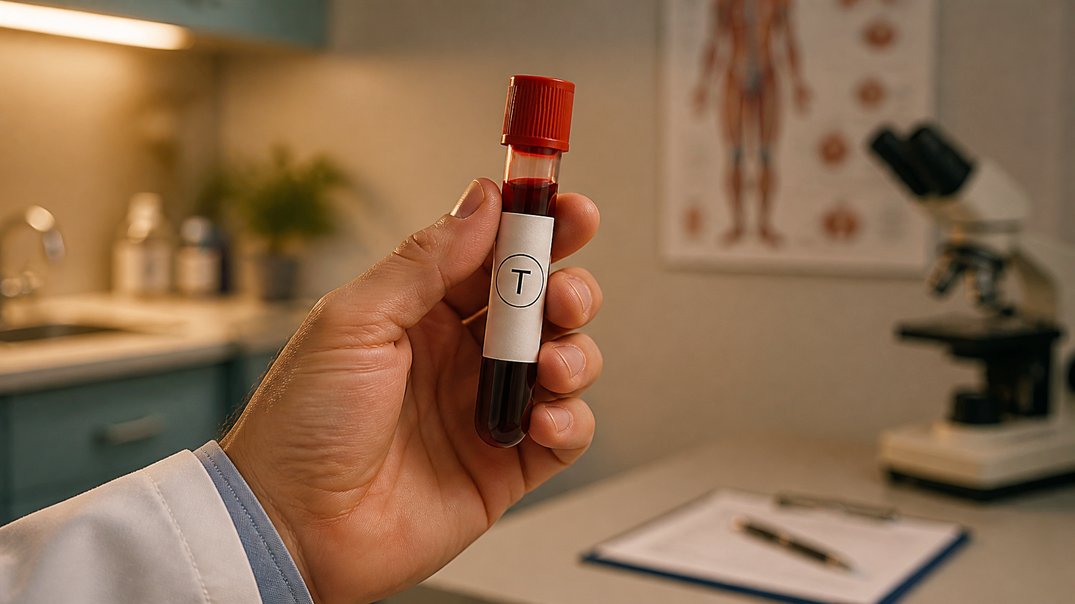
Most U.S. guidelines use a total testosterone level below 300 ng/dL as a reasonable cutoff supporting a diagnosis of low testosterone, but here’s something worth knowing: different major medical organizations actually disagree on the exact number, with published cutoffs ranging from 200 to 350 ng/dL depending on which group’s guideline you’re looking at.
The Most Commonly Used Threshold
The American Urological Association recommends using a total testosterone level below 300 ng/dL as a reasonable cutoff in support of a low testosterone diagnosis, and the FDA uses the same 300 ng/dL threshold for clinical trial purposes (American Urological Association, 2018 guideline). This is the number you’ll most commonly see referenced in U.S. clinical practice.
Why Different Organizations Use Different Numbers
This isn’t a minor technicality. The American Association of Clinical Endocrinologists uses 200 ng/dL as its lower limit, the Endocrine Society has referenced 264 ng/dL, while the European Association of Urology and several international societies have used 345 to 350 ng/dL. This means the same test result could be labeled “normal” by one standard and “low” by another. Guidelines consistently emphasize that no result should be interpreted in isolation from your symptoms, precisely because the cutoff itself is somewhat contested.
Why A Result Alone Never Tells The Whole Story
Every major guideline agrees on one thing: a low number by itself isn’t enough to diagnose testosterone deficiency. The diagnosis requires both a confirmed low level (on two separate morning tests) and consistent symptoms, such as reduced libido, fatigue, erectile difficulties, or loss of muscle mass. A low number with no symptoms, or symptoms with a normal number, generally doesn’t meet the threshold for diagnosis on its own.
What Free Testosterone Results Mean
If your doctor also measures free testosterone, some guidelines suggest a level below roughly 65 pg/mL may provide supportive evidence for a diagnosis, particularly useful when total testosterone falls in a borderline, hard-to-interpret range or when a condition affecting SHBG (a testosterone-binding protein) is suspected. There isn’t a single universally accepted lower limit for free testosterone the way there’s a commonly cited one for total testosterone, so this number is generally interpreted alongside the rest of the picture rather than as a standalone cutoff.

Why Lab-To-Lab Variability Adds Another Layer
Beyond the disagreement between medical societies, individual labs can have meaningfully different reference ranges depending on the specific assay method they use. This is part of why sticking with the same lab for repeat testing, and discussing your specific result with a doctor rather than comparing it against a number you found online, gives you a more accurate read on your situation.
The Bottom Line
A total testosterone below 300 ng/dL is the most commonly referenced cutoff in the U.S., but it’s genuinely not a universally agreed-upon number, and your result should always be interpreted together with your symptoms and, ideally, a second confirming test. A single number, taken in isolation, doesn’t tell the full story.
Frequently Asked Questions
What testosterone number is considered low?
Below 300 ng/dL is the most commonly used cutoff in U.S. clinical practice, though other organizations use cutoffs ranging from 200 to 350 ng/dL.
Can I be diagnosed with low testosterone if I don’t have symptoms?
Generally no; a diagnosis typically requires both a confirmed low level and consistent symptoms.
Why did two different sources give me different “normal” ranges?
Different labs and medical organizations use different reference ranges and assay methods, which is a genuine, acknowledged source of variability.
What should I do if my result is borderline?
Discuss it with a doctor, who may recommend a repeat morning test or free testosterone measurement to get a clearer picture.