Every sophisticated building has a security system that operates independently of the people inside it. Motion detectors that trigger the moment something moves. Alarms that go off automatically when a door is forced. Cameras recording continuously whether or not anyone is watching the feed. These systems do not wait to be switched on when a threat is detected. They are always on, always monitoring, and they respond to recognized categories of threat without requiring a human decision in the loop.
Your innate immune system is the biological equivalent of this built-in security infrastructure. It has been operating since before you were born, it works without your awareness or deliberate activation, and it responds to pathogens and tissue damage using detection systems and response protocols that are hardwired rather than learned. It is not as precise as the adaptive immune system that follows it, but in the critical early hours of an infection, precision matters less than speed and breadth of coverage. The innate immune system provides both.
Built-In from the Start
The defining feature of the innate immune system is that it does not require prior experience with a specific pathogen to respond to it. This is what makes it innate, present and functional from birth, equipped with recognition systems that detect broad categories of molecular threat without needing to have encountered those specific threats before. The contrast with the adaptive immune system is stark: adaptive immunity must encounter, identify, and learn a pathogen before it can mount a targeted response. The innate system has no such requirement.
This prior-exposure independence comes from pattern recognition receptors, molecular detection tools distributed across innate immune cells that identify molecular features common to many different pathogens. These features, called pathogen-associated molecular patterns, include bacterial cell wall components, viral nucleic acids in configurations that do not occur in healthy human cells, and fungal surface molecules. When a pattern recognition receptor detects one of these signatures, it triggers an immediate cellular response that does not wait for confirmation or further analysis.
Detection Without Discrimination
The trade-off for this rapid, experience-independent detection is that the innate system cannot distinguish between a familiar pathogen and a novel one. It responds to the category, not the identity. A bacterium that has never circulated in human populations before will trigger the same innate immune response as a bacterium the immune system has encountered hundreds of times. This non-specificity is sometimes described as a limitation, but it is more accurately understood as a design choice: breadth of coverage now, specificity later from the adaptive system that the innate response activates and informs.
The Physical Security Layer: Barriers Before Cells
Before any immune cell encounters a pathogen, the innate immune system’s physical barriers provide the first layer of protection. These barriers are so effective that the vast majority of potential pathogens are eliminated before they ever trigger a cellular immune response.
Skin is the most obvious and extensive physical barrier, covering the body’s exterior with a multi-layered shield that most pathogens cannot penetrate intact. The mucous membranes lining the respiratory tract, gut, and urogenital tract provide a different approach: rather than a hard barrier, they produce a sticky mucus rich in antimicrobial proteins that traps and neutralizes pathogens before they can reach the underlying epithelial cells.
The respiratory tract adds a mechanical clearance mechanism through cilia, tiny hair-like projections that beat rhythmically to sweep mucus and trapped pathogens away from the lungs toward the throat, where they can be swallowed and destroyed by stomach acid. That stomach acid is itself a potent chemical barrier, highly acidic enough to destroy most ingested microorganisms before they reach the intestine. Tears, saliva, and sweat contain lysozyme, an enzyme that disrupts bacterial cell walls. These chemical defenses operate continuously, silently neutralizing countless threats before they ever become immunological problems.

The Cellular Security Response
When pathogens breach the physical barriers and enter tissue, the cellular components of the innate immune system mobilize within minutes to hours. This rapid cellular response is what prevents most infections from gaining significant ground before the adaptive immune system has time to prepare.
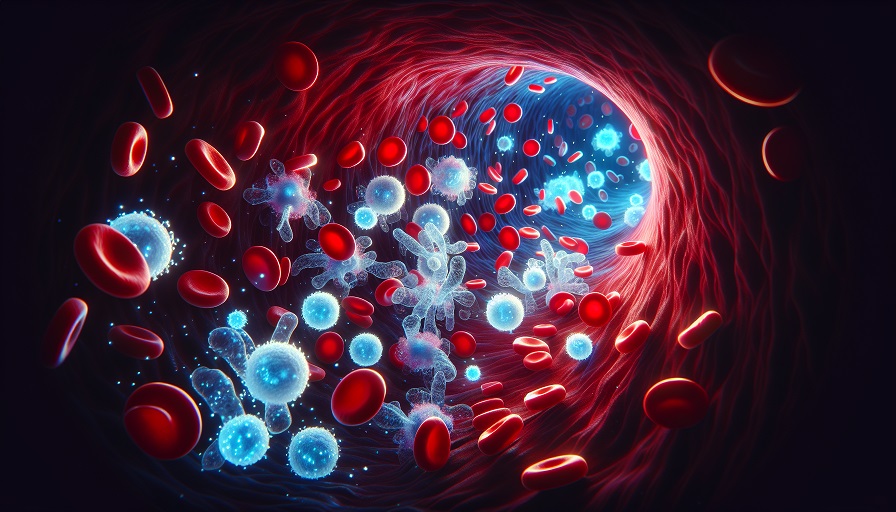
Neutrophils are typically among the first specialized immune cells to arrive at an infection site, recruited by chemical alarm signals released by damaged tissue and resident immune cells. These short-lived but aggressive cells engulf bacteria through phagocytosis and destroy them using a combination of toxic oxidative compounds generated by their oxidative burst and a suite of antimicrobial proteins stored in internal granules. In severe bacterial infections, neutrophils may even sacrifice themselves by releasing their DNA as sticky nets called neutrophil extracellular traps that physically ensnare bacteria and hold them in place for destruction.
Macrophages: The Resident Sentinels
While neutrophils are recruited to infection sites from the bloodstream, macrophages are already there. These long-lived cells reside in virtually every tissue of the body, positioned as permanent resident sentinels that provide continuous local immune surveillance. When a macrophage detects pathogen signatures, it engulfs and destroys the invader through phagocytosis, simultaneously releasing inflammatory cytokines that amplify the local immune response, recruit additional immune cells, and begin sending signals to the adaptive immune system that a threat has been identified and a broader response is needed.
Macrophages are also involved in cleanup after the active infection phase, engulfing dead cells and cellular debris to prevent the accumulation of material that could drive ongoing inflammation. This dual role as both a combatant and a janitor reflects the macrophage’s remarkable functional versatility.
Natural Killer Cells: The Innate System’s Targeted Strike Force
Among the most sophisticated components of the innate immune system are natural killer cells, which solve a problem that neutrophils and macrophages cannot easily address: how to detect and eliminate cells that have been infected from the inside. Neutrophils and macrophages primarily deal with pathogens outside cells. NK cells specialize in identifying cells whose internal situation has been compromised.
Every healthy cell displays surface markers called MHC class I molecules that signal “I belong here and I am functioning normally.” Virus-infected cells and malignant cells frequently lose or alter these markers as a result of their compromised state. NK cells continuously check for this normal display as they patrol through tissue. Cells that cannot produce the right surface credentials are identified as compromised and targeted for elimination through the same perforin-granzyme apoptosis mechanism used by killer T-cells.
NK cells are also sensitive to activating signals produced by stressed, infected, or damaged cells, providing a second detection mechanism that complements the missing-credential check. This dual detection approach means NK cells are capable of identifying a broad range of cellular abnormalities, making them important not just for antiviral defense but for ongoing immune surveillance against cellular malignancy.
The Communication Network: Interferons and Cytokines
The cellular components of the innate immune system are connected by a dense communication network of cytokines and interferons that coordinate their activities and link them to the adaptive immune response that follows. Plasmacytoid dendritic cells, when activated by viral signatures, produce massive quantities of type I interferons that put the entire immune system on high alert, slow viral replication in surrounding cells, and trigger activation cascades that reach natural killer cells and ultimately initiate the adaptive immune response through their effects on conventional dendritic cells.
Inflammatory cytokines from macrophages and other innate cells increase blood flow and vascular permeability at infection sites, creating the warmth, redness, and swelling associated with local inflammation. These changes are not incidental side effects. They are deliberate physiological responses that accelerate immune cell arrival at the infection site and create conditions less favorable for pathogen replication. Inflammation, when appropriate and self-limiting, is immune function working correctly.
Keeping the Security System Operational
The innate immune system’s effectiveness is not a fixed constant. It varies based on age, nutritional status, sleep quality, stress levels, and other modifiable factors. Vitamin D supports NK cell differentiation and activity and promotes the production of antimicrobial peptides at mucosal barrier surfaces. Zinc supports macrophage phagocytic function and neutrophil-activating cytokine production. Glutathione protects innate immune cells from oxidative damage during the cytotoxic and phagocytic activity they engage in. Selenium amplifies this protection through its role in glutathione peroxidase enzymes.
Sleep is when much of the innate immune system’s cellular replenishment occurs. Chronic stress suppresses NK cell cytotoxic activity and innate cytokine production through cortisol’s immunosuppressive mechanisms. Your built-in security system is extraordinarily capable, but it works best when the conditions in which it operates are given the same care and attention as any other aspect of your health.