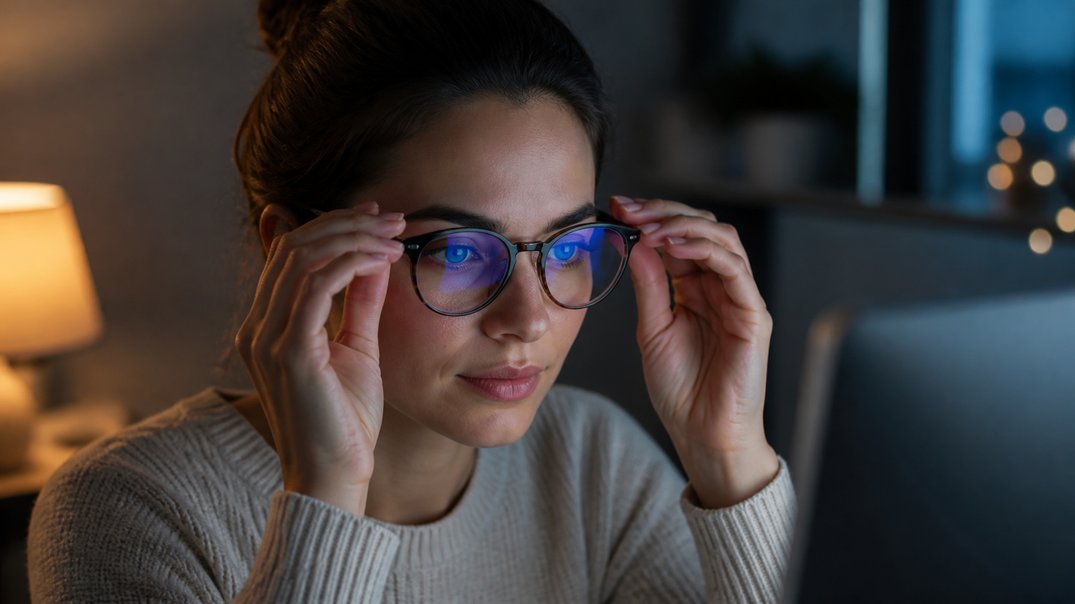
Finals week strains your eyes because long study sessions mean hours of close focus, less blinking, and often too little sleep. The fixes are simple: take a distance break at every study block, blink on purpose, light your workspace well, and protect your sleep. Screen blue light hasn’t been shown to damage eyes, so focus on comfort and rest.
Why Finals Week Is Hard on Your Eyes
Studying keeps your focusing muscles working and your blink rate low. A survey of 364 university students in Riyadh found that 84.6 percent used digital devices five hours or more a day, and only 37.4 percent were aware of the 20-20-20 rule. Digital eye strain is common in this age group, and cramming for days at a stretch makes it worse. The symptoms are eyestrain, headaches, blurred vision, and dry eyes.
The Sleep and Eye Strain Connection
Late-night studying cuts into sleep, and lack of sleep is one of the factors that can make eyes feel strained. In a survey of 497 female college students in North India, researchers found that sleep-wake difficulties were common among those with computer vision syndrome. A Saudi study of undergraduates likewise found that many students had both poor sleep quality and computer vision syndrome. These studies show associations, not cause and effect, but the message is practical: rested eyes recover better.
Smart Study Habits for Your Eyes
Pair eye care with how you already study. A 2023 study of 29 symptomatic computer users found that following the 20-20-20 rule with reminders for two weeks reduced eye strain and dry eye symptoms, though the benefit faded after reminders stopped. The exact timing is debated, but the principle is sound: look far away often. Use the end of each flashcard set or practice problem as your cue.

Dorm and Library Lighting Fixes
Dim rooms with a bright screen make your eyes work harder. Light your desk softly, avoid glare from windows or lamps, and keep your screen about an arm’s length away. If you can, move practice problems or readings onto paper for part of the day. Your eyes will appreciate the variety.
A Finals Week Eye Care Checklist
- Look away every 20 minutes. Focus on something far away, like the window or the other side of the room.
- Blink fully. Intense concentration cuts blinking, which dries your eyes.
- Take real breaks. Step outside for a few minutes between study blocks.
- Dim screens at night. Evening light, especially blue light, is most disruptive to sleep.
- Protect your sleep. Rested eyes recover better.
- Use artificial tears. They help if your eyes feel dry, but remove contacts first if they’re irritated.
- Keep your prescription current. Squinting and headaches can signal it’s time for an exam.
Nutrients Studied for Screen Time and Eye Comfort
In the six-month B.L.U.E. trial, 48 healthy adults aged 18 to 25 with at least six hours of daily screen time took lutein and zeaxanthin supplements. The researchers reported higher macular pigment, fewer eye strain symptoms, and fewer headaches than placebo.
Astaxanthin and blackcurrant have small trials on screen-related eye fatigue as well. A crossover study found that 50 mg of blackcurrant anthocyanins prevented the drop in refraction values seen with placebo after a visual task.
The Bottom Line on Eye Care During Finals
You don’t need an elaborate routine to protect your eyes. Look up often, blink, light your space, and sleep when you can. A little care now means you’ll walk into the exam with clear, comfortable eyes.
Finals Week Eye Strain FAQs
Why Do My Eyes Hurt When I Study for Hours?
Close focus keeps your eye muscles working, and screens and reading reduce blinking. Dry eyes, glare, and lack of sleep add to the strain.
Does Blue Light From Screens Damage Your Eyes?
The American Academy of Ophthalmology says there is no scientific evidence that screen blue light damages the eyes. Late-night light can affect sleep, though.
Should Students Use Blue Light Glasses?
A Cochrane review found that blue-light filtering glasses probably make little or no difference to eye strain or sleep quality. Breaks and good lighting are better bets.
Can Lack of Sleep Make My Eyes Feel Worse?
Yes. Lack of sleep is among the factors that can contribute to eye strain, and studies link poor sleep with digital eye strain in students.