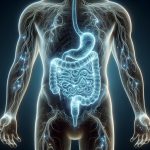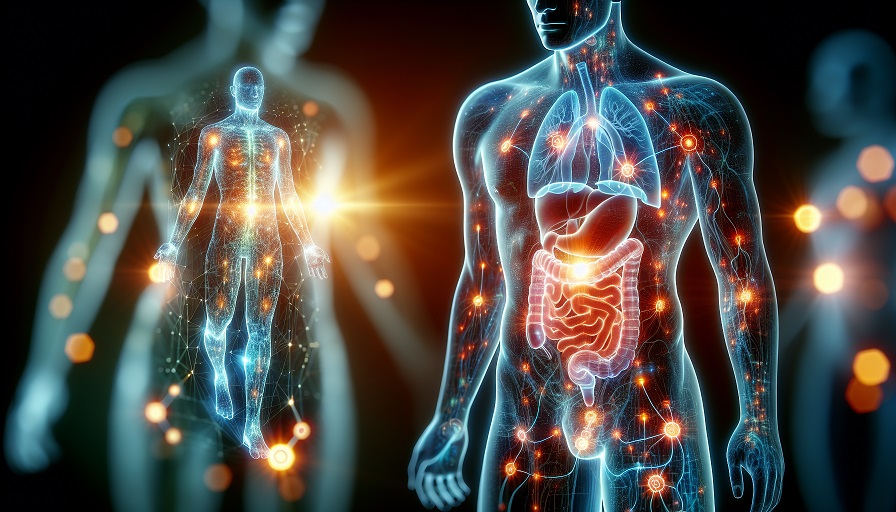
The word “restoring” carries more weight in the context of Akkermansia than it might seem at first. It implies that something was lost, which for a significant portion of the population is exactly the situation. Akkermansia muciniphila is a natural resident of a healthy gut, but modern life has a remarkable talent for depleting it: high-fat processed diets, repeated antibiotic courses, chronic stress, sedentary habits, and the metabolic dysfunction that those factors generate all suppress Akkermansia populations in ways that compound over time. The question of whether restoring it can support GLP-1 naturally is therefore, for many people, really a question about what happens when you give back to the gut something it was never supposed to be without.
The answer that emerges from the research is genuinely encouraging, with the kind of mechanistic coherence that makes it more than just an interesting correlation. Whether restoration works for you specifically depends on where you’re starting from, how you go about it, and what you’re expecting at the end. All three of those factors deserve a clear-eyed look.
Who Has Depleted Akkermansia and Why It Matters
Before asking whether restoring Akkermansia can support GLP-1, it’s worth establishing how widespread the depletion problem actually is. Studies examining gut microbiome composition across different populations have consistently found that Akkermansia abundance is significantly lower in people with obesity, type 2 diabetes, metabolic syndrome, non-alcoholic fatty liver disease, and inflammatory bowel conditions than in metabolically healthy control groups. In some studies of people with severe obesity, Akkermansia is virtually undetectable. This is not a marginal finding in a niche population. It is a consistent pattern across research conducted in multiple countries and diverse patient groups.
The Factors That Drive Depletion
Understanding why Akkermansia gets depleted helps clarify why restoring it through intentional intervention is both necessary and biologically logical. Diets high in ultra-processed foods and low in dietary fiber thin the mucus layer that Akkermansia depends on for habitat and nutrition, directly undermining the conditions it needs to maintain its population. Broad-spectrum antibiotics, particularly those targeting gram-negative bacteria, reduce Akkermansia levels that can take months to recover spontaneously. Dietary emulsifiers, found in an enormous range of packaged foods, have been shown to disrupt the mucus layer structure in ways that are specifically hostile to mucus-layer bacteria like Akkermansia. Chronic psychological stress alters gut motility, immune function, and mucosal integrity through the gut-brain axis in ways that create an unfavorable environment for Akkermansia colonization.
The metabolic conditions associated with low Akkermansia are themselves causes of further depletion. Insulin resistance, systemic inflammation, and impaired gut barrier function all suppress Akkermansia in ways that create the self-reinforcing downward spiral mentioned earlier: less Akkermansia leads to worse metabolic function, which leads to less Akkermansia. For people caught in that cycle, the question of restoration is not academic. It is about interrupting a feedback loop that dietary changes alone may struggle to break without some direct support for the bacterium itself.
Why the Depletion Affects GLP-1 So Specifically
Akkermansia’s intimate relationship with the intestinal mucus layer places it in direct proximity to the L-cells responsible for GLP-1 secretion. When Akkermansia is depleted and the mucus layer deteriorates, the consequences for those L-cells are not distant or indirect. The physical environment they depend on becomes compromised. Bacterial lipopolysaccharides cross the thinning barrier and trigger localized inflammatory signaling that suppresses secretory responsiveness. The short-chain fatty acids that stimulate L-cells to release GLP-1 become less abundant as Akkermansia’s contribution to the gut’s fermentation economy diminishes. The result is a GLP-1 production deficit that develops from the ground up, from the mucosal environment outward, in a way that makes Akkermansia restoration a logically targeted intervention for natural GLP-1 support.
What the Research Shows About Restoration and GLP-1
The research on Akkermansia restoration spans a range of experimental approaches, from germ-free mouse colonization studies at one end to randomized human supplementation trials at the other, with animal intervention models and human observational data filling the middle ground. Each level of the evidence hierarchy contributes something different to the overall picture.
Controlled Animal Studies
Animal intervention studies have provided the clearest causal evidence that restoring Akkermansia in depleted microbiomes improves GLP-1 activity. In multiple experiments using mice with diet-induced obesity or genetic models of metabolic dysfunction, oral administration of Akkermansia, whether live, pasteurized, or as isolated Amuc_1100 protein, has produced consistent increases in postprandial GLP-1 secretion alongside improvements in glucose tolerance, insulin sensitivity, and gut barrier integrity. Critically, these studies have used depleted or germ-free animals as their starting point, making the restoration framing accurate in a literal experimental sense. The GLP-1 benefits observed are not additive effects on top of a healthy baseline. They are restorations of a function that was impaired by the absence of the bacterium.
The Human Clinical Evidence
The pivotal human study, the 2019 Nature Medicine trial by Plovier, Cani, and colleagues, enrolled overweight and obese adults with metabolic syndrome, a population where Akkermansia depletion is reliably present. Participants receiving pasteurized Akkermansia for three months showed significant improvements in insulin sensitivity, reduced markers of gut barrier permeability indicating a healthier mucosal environment, and favorable shifts in cholesterol levels. These outcomes are mechanistically consistent with restored GLP-1 signaling, even though GLP-1 was not the trial’s primary measured endpoint. Subsequent research has increasingly characterized the human populations most likely to benefit as those with pre-existing Akkermansia depletion, reinforcing the restoration framing as the clinically relevant one.
The Natural Experiment of Weight Loss Surgery
Bariatric surgery, particularly Roux-en-Y gastric bypass, consistently produces dramatic increases in GLP-1 secretion that are considered central to its metabolic benefits beyond simple caloric restriction. Post-surgical gut microbiome analysis repeatedly identifies significant increases in Akkermansia abundance as one of the most consistent microbiome changes following the procedure, appearing alongside the GLP-1 surge in a temporal relationship that has attracted serious research attention. While the causal direction of this association remains debated, it represents a natural human context in which Akkermansia restoration and GLP-1 elevation co-occur following a major metabolic intervention, adding a layer of human biological plausibility to the restoration hypothesis that the controlled animal studies support more directly.
Strategies for Restoring Akkermansia
Restoration can happen through several distinct approaches, and the most effective strategy for a given person depends on how depleted their starting point is, what factors caused the depletion, and what practical tools they are willing and able to deploy consistently over the weeks and months required for meaningful change.
Direct Supplementation
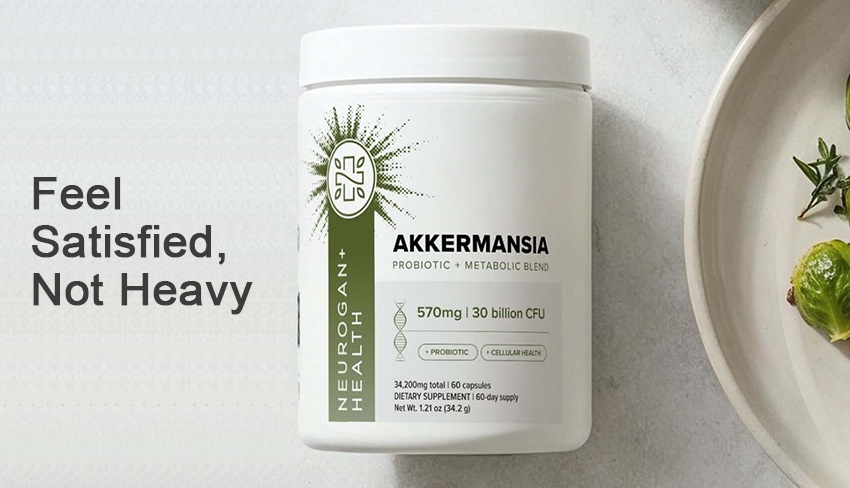
Pasteurized Akkermansia muciniphila supplements represent the most direct restoration approach and the one with the most direct clinical backing from human trials. Products standardized to a specific bacterial equivalent count per dose, typically in the range used in the Nature Medicine trial, provide a predictable and consistent input into the gut environment. The pasteurized form is shelf-stable, does not require the specialized anaerobic manufacturing conditions that live Akkermansia demands, and delivers the Amuc_1100 protein activity that appears to drive many of the metabolic benefits observed in research. For people with significantly depleted Akkermansia, direct supplementation creates the most reliable initial restoration stimulus, particularly when combined with dietary strategies that support the bacterium’s establishment and maintenance.
Polyphenol-Rich Foods and Supplements
Among dietary interventions with documented Akkermansia-promoting effects, polyphenols occupy a particularly well-evidenced position. Pomegranate extract, standardized for ellagitannin content, has been shown in multiple studies to significantly increase Akkermansia abundance in the gut. Cranberry polyphenols, grape seed proanthocyanidins, green tea catechins, and the polyphenol content of dark berries and vegetables have all demonstrated Akkermansia-promoting activity in human and animal research. The mechanism involves polyphenols reaching the colon largely undigested, where their interaction with the microbial community selectively favors Akkermansia’s competitive position. For people who prefer dietary over supplemental approaches, or who want to support Akkermansia restoration alongside direct supplementation, polyphenol-rich food choices and targeted extracts represent a meaningful and practically accessible strategy.
Prebiotic Fiber and Gut Environment Optimization
While Akkermansia feeds primarily on mucin rather than dietary fiber, the broader microbial ecosystem it inhabits and depends on is highly fiber-responsive. Prebiotic fibers including chicory inulin, fructooligosaccharides, and arabinoxylan from wheat bran support the fermentative bacterial community that cross-feeds with Akkermansia and produces the SCFA-rich environment in which its GLP-1-stimulating effects are most pronounced. Increasing dietary fiber as part of an Akkermansia restoration strategy does double duty: it improves the conditions for Akkermansia’s establishment and supports the independent SCFA-mediated GLP-1 stimulation that makes its presence metabolically meaningful.
Frequently Asked Questions
How Do You Know If Your Akkermansia Levels Need Restoring?
The clearest indicators are indirect: the presence of metabolic risk factors like prediabetes, metabolic syndrome, elevated triglycerides, or excess central adiposity correlates strongly with Akkermansia depletion across population studies. Consumer gut microbiome testing services can measure Akkermansia abundance in stool samples, though the interpretive standards for what constitutes a clinically meaningful deficit are not yet established. A history of repeated antibiotic use, long-term low-fiber eating, or significant unexplained weight gain are also practical signals worth taking seriously when considering Akkermansia support.
How Long Does It Take to Restore Akkermansia to Meaningful Levels?
The timeline varies considerably depending on the depth of depletion and the combination of strategies employed. Dietary polyphenol interventions have produced measurable increases in Akkermansia within four weeks in some studies, while the full metabolic benefits of supplementation-based restoration typically require eight to twelve weeks of consistent effort. Post-antibiotic recovery of Akkermansia without deliberate intervention can take three to six months, which is one reason targeted support during and after antibiotic treatment is worth considering rather than waiting for spontaneous recovery.
Can Akkermansia Be Restored Through Food Alone Without Supplements?
For people with moderate depletion, dietary strategies combining polyphenol-rich foods, adequate prebiotic fiber, and elimination of gut-disruptive emulsifiers can produce meaningful Akkermansia recovery without supplementation. For people with severe depletion, where the gut environment has been significantly compromised by metabolic dysfunction or extensive antibiotic exposure, dietary changes alone may restore Akkermansia more slowly and less reliably than a combined approach that includes direct supplementation. The two strategies are complementary, and starting with diet while adding supplementation for more pronounced or faster restoration is a reasonable pragmatic approach.
Does Restoring Akkermansia Have Any Effect on Gut Symptoms Beyond Metabolic Health?
Improved gut barrier integrity associated with Akkermansia restoration tends to reduce the low-grade systemic inflammation that drives many non-specific symptoms including fatigue, brain fog, and diffuse digestive discomfort. Some people report improvements in bowel regularity and reduced bloating alongside the metabolic improvements, consistent with a healthier overall gut environment. These effects are secondary to the mucosal and metabolic mechanisms rather than primary targets of Akkermansia activity, but they are commonly reported in both clinical research and supplementation experience.